
QuickBooks Desktop has become one of the most trusted accounting solutions for businesses that need complete control over bookkeeping, payroll processing, inventory management, tax preparation, financial reporting, and customer records. While most users focus on creating invoices, recording expenses, reconciling bank accounts, or generating financial reports, very few realize that every action performed inside QuickBooks depends on dozens of background technologies working together.
Behind the familiar interface exists an interconnected system made up of Windows services, company file databases, storage devices, networking components, security permissions, internet communication protocols, and supporting Microsoft technologies. Every transaction entered into QuickBooks Desktop travels through these systems before it is stored safely inside the company file. If even one component stops functioning correctly, users may notice slower performance, interrupted workflows, connection failures, update problems, or unexpected error messages.
Many businesses assume that an error displayed by QuickBooks Desktop points directly to the source of the problem. In reality, the visible message is often only the final symptom of a much deeper issue. A damaged Windows component, unstable internet connection, inaccessible storage location, incorrect permissions, or interrupted communication between system services may all affect how QuickBooks operates. Understanding these relationships helps businesses investigate problems more effectively instead of treating every error as an isolated software malfunction.
This guide explores the hidden systems that keep QuickBooks Desktop running smoothly. It explains how Windows, networking, company files, database services, and online communication work together to maintain reliable accounting operations. It also discusses what happens when these systems fail and why a structured understanding of the software environment can help businesses reduce downtime, improve data protection, and maintain long-term operational stability.
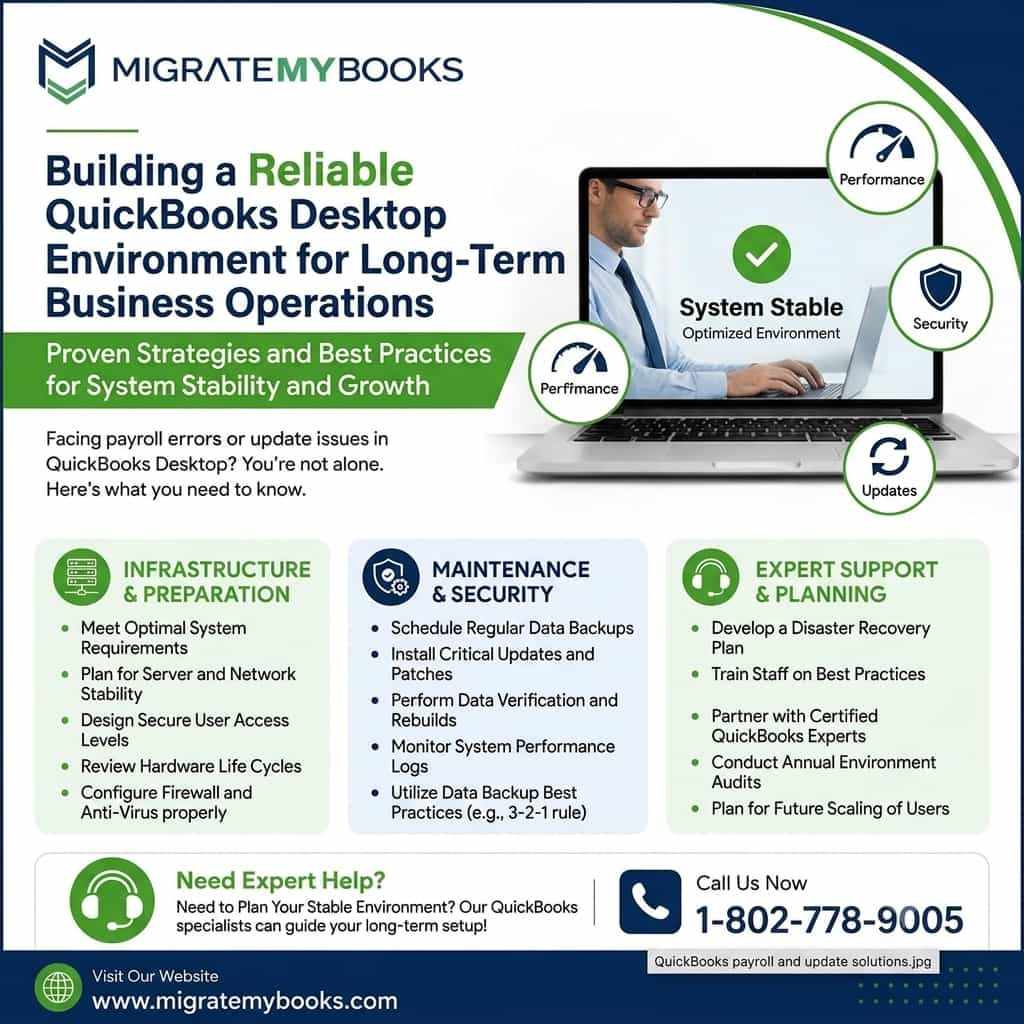
Long-term reliability requires a proactive approach rather than reacting only when errors appear. Regular backups, proper permissions, updated system components, optimized storage, secure networking, and consistent maintenance practices all contribute to a healthier QuickBooks Desktop environment. Businesses that invest time in improving their overall setup can reduce downtime and protect important financial information. By following strategies discussed in Building a High-Performance QuickBooks Desktop Environment: Best Practices for Reliability, Security, and Long-Term Success, organizations can create a dependable accounting ecosystem designed for better performance, stronger security, and sustainable growth.
Understanding QuickBooks Desktop Beyond the User Interface
Most people think of QuickBooks Desktop as a single accounting application installed on a Windows computer. In reality, it operates more like a complete financial ecosystem where multiple technologies continuously exchange information to process accounting activities accurately.
Whenever a user creates an invoice, records a payment, runs payroll, or generates a financial report, QuickBooks performs hundreds of background operations that remain invisible during normal use. These operations verify company data, communicate with Windows services, retrieve information from the company database, confirm user permissions, and update multiple accounting records simultaneously.
This interconnected design allows QuickBooks Desktop to maintain financial accuracy while supporting both single-user and multi-user environments.
Instead of relying on one software component, QuickBooks depends on several layers working together, including:
The QuickBooks Desktop application
Company file database
Microsoft Windows operating system
Database Server Manager
Local and shared storage devices
Network communication services
Security permissions
Internet connectivity
Backup and recovery systems
Each layer performs a different responsibility, yet every layer depends on the others to complete accounting tasks successfully.
Why Every Accounting Transaction Depends on Multiple Systems
Many users believe clicking Save simply stores information inside the company file.
The actual process is considerably more complex.
For example, when a customer invoice is created, QuickBooks Desktop typically performs operations such as:
Validating customer information.
Checking company file integrity.
Confirming user permissions.
Processing accounting rules.
Updating accounts receivable.
Recording income transactions.
Updating financial reports.
Saving information inside the database.
Creating transaction logs.
Refreshing the user interface.
Although this process usually completes within seconds, it requires successful communication between multiple software and hardware components.
If one part of this workflow becomes unavailable, QuickBooks may not complete the transaction correctly.
Why Hidden System Components Matter
The hidden technologies supporting QuickBooks Desktop influence nearly every aspect of software reliability.
These systems help manage:
Company File Communication
QuickBooks must continuously read and write information inside the company file while protecting data consistency.
Windows Services
Core Microsoft services provide the foundation required for installation, updates, printing, networking, and application stability.
Database Communication
Businesses using multi-user mode depend on database services to coordinate access between multiple workstations without creating conflicting changes.
Network Infrastructure
Employees accessing shared company files rely on stable communication between workstations, servers, and hosting computers.
Internet Services
Several QuickBooks features—including payroll updates, product updates, and license verification—depend on secure communication with online services.
Security Controls
Windows permissions, firewall settings, and antivirus software help protect financial information while allowing QuickBooks Desktop to access the resources it needs.
Maintaining balance between accessibility and security is essential for smooth accounting operations.
What Happens When These Systems Stop Working Together?
Because QuickBooks Desktop depends on so many interconnected technologies, problems in one area often affect several others.
For example:
A network interruption may prevent access to a shared company file.
Storage issues can delay report generation and transaction processing.
Damaged Windows components may interrupt software updates.
Incorrect permissions can block access to accounting data.
Firewall restrictions may interfere with online services.
Rather than viewing these situations as isolated software failures, it is more useful to see them as indicators that one or more supporting systems require attention.
Understanding the Core Architecture of QuickBooks Desktop
QuickBooks Desktop may appear to function as a single accounting application, but internally it operates through several interconnected layers that work together to process financial information securely and efficiently. Every invoice, payroll transaction, inventory adjustment, and financial report depends on successful communication between these layers. If one component becomes unavailable, the entire accounting workflow may be affected.
Rather than storing and displaying information independently, QuickBooks Desktop relies on Windows services, company file databases, storage devices, networking components, and communication services to complete each accounting task. This design helps maintain data accuracy while allowing businesses to handle thousands of financial transactions reliably.
A typical QuickBooks Desktop environment includes the following components:
QuickBooks Desktop application
Company file database
Microsoft Windows operating system
Database Server Manager
Local or network storage
Internet communication services
Security applications
Backup and recovery tools
Windows permission management
Although users rarely interact with these systems directly, they continuously operate behind the scenes to support daily accounting activities.
How QuickBooks Processes Everyday Financial Activities
Even a simple accounting task involves several background operations.
For example, when recording a customer payment, QuickBooks Desktop must:
Verify the user's permissions.
Open the company file.
Read customer information.
Validate accounting records.
Update customer balances.
Record the payment transaction.
Modify financial reports.
Save changes to the company database.
Update transaction logs.
Display the completed information.
Each step depends on successful communication between the application, Windows operating system, storage device, and company database.
Because these operations occur automatically, users typically notice them only when something interrupts the process.
Maintaining a stable QuickBooks Desktop environment requires more than simply installing the software and updating it regularly. Businesses need to understand how different components interact with each other, from Windows services and company file databases to networking systems and security configurations. A complete understanding of these relationships helps organizations identify problems faster and create a stronger foundation for daily accounting operations. For businesses dealing with multiple software issues, The Complete Guide to Common QuickBooks Errors: Causes, Fixes, and Troubleshooting Solutions provides valuable insights into how different errors develop and how they can be approached through structured troubleshooting methods instead of temporary fixes.
Microsoft Windows: The Foundation Behind QuickBooks Desktop
QuickBooks Desktop is built specifically for Microsoft Windows, meaning its performance depends heavily on the health of the operating system.
Windows manages many essential functions, including:
Memory allocation
File management
User authentication
Printer communication
Network connectivity
Software installation
Security permissions
Background services
If Windows itself experiences configuration issues, QuickBooks may also begin showing unusual behavior.
For this reason, maintaining Windows is just as important as maintaining QuickBooks Desktop itself.
Microsoft .NET Framework
One of the most important Windows technologies supporting QuickBooks Desktop is the Microsoft .NET Framework.
The .NET Framework provides software libraries that allow QuickBooks to perform many internal operations, including:
Opening application windows
Running payroll features
Processing reports
Installing software components
Communicating with Windows services
Executing background tasks
If the framework becomes damaged or outdated, businesses may notice:
Installation problems
Program startup failures
Unexpected crashes
Missing features
Reduced application stability
Keeping Windows updated helps maintain compatibility between QuickBooks Desktop and the .NET Framework.
Microsoft Visual C++ Redistributables
QuickBooks Desktop also depends on Microsoft Visual C++ components to execute many of its internal processes.
These libraries support:
Program execution
Memory management
Internal software communication
Dynamic application functions
Performance optimization
Missing or corrupted Visual C++ files can reduce software reliability and may interfere with startup or update operations.
Microsoft XML Core Services (MSXML)
QuickBooks frequently exchanges structured information during installation, updates, licensing, and configuration.
Microsoft XML Core Services (MSXML) help process this information accurately.
MSXML contributes to:
Reading configuration files
Processing update information
Managing installation data
Supporting communication with external services
Because XML technology operates silently in the background, users often overlook its importance until communication problems begin affecting software functionality.
Windows Installer Service
Whenever QuickBooks Desktop is installed, repaired, updated, or modified, Windows Installer coordinates the process.
Its responsibilities include:
Installing application files
Updating software components
Repairing damaged installations
Removing obsolete files
Registering system components
If Windows Installer becomes unavailable, software maintenance tasks may not complete successfully.
This can leave QuickBooks only partially updated, increasing the likelihood of future operational issues.
Why Windows Permissions Matter
Windows security permissions determine which users, applications, and background services may access company files and system resources.
QuickBooks Desktop depends on these permissions for many daily operations.
Permissions affect the software's ability to:
Open company files
Save accounting transactions
Create backups
Install updates
Access shared folders
Communicate with hosting services
If permissions become overly restrictive, QuickBooks may lose access to required resources even though the software installation itself remains healthy.
For businesses operating shared accounting environments, periodically reviewing user permissions helps maintain both accessibility and security.
How Hidden Windows Services Support Accounting Reliability
Several Windows background services continue operating even when users are unaware of them.
These services help QuickBooks Desktop perform tasks such as:
File Management
Windows controls how QuickBooks reads and writes company data while maintaining file integrity.
Memory Management
The operating system allocates available memory so QuickBooks can process large company files, payroll information, and financial reports efficiently.
Printing Services
Invoices, checks, purchase orders, and reports rely on Windows printing services before reaching local or network printers.
Network Communication
Windows networking components manage communication between workstations, shared folders, hosting computers, and internet services.
Security Management
Windows continuously monitors user authentication and permission validation to help protect sensitive accounting information.
How Windows Problems Can Affect QuickBooks Desktop
Because QuickBooks depends on Windows for nearly every operation, operating system issues often appear as accounting software problems.
Examples include:
Damaged Windows files interrupting software updates.
Permission conflicts preventing company file access.
Network configuration changes affecting shared folders.
Background services failing to start correctly.
Security software blocking required communication.
For businesses using online features, these interruptions may contribute to communication-related situations such as QuickBooks Error 12009 or QuickBooks Error 12037, both of which are commonly investigated by reviewing internet connectivity, Windows networking components, and security settings.
Similarly, if Windows cannot properly communicate with the storage location of a company file because of permission restrictions or file accessibility issues, users may encounter circumstances associated with QuickBooks Error 6000 107. In many cases, the error reflects a broader communication problem rather than a defect within the company file itself.
Understanding the role of Windows services helps businesses troubleshoot more effectively by examining the complete operating environment instead of focusing solely on the visible symptom.
The Company File: The Heart of Every QuickBooks Desktop Environment
Every QuickBooks Desktop installation revolves around one essential component—the company file. This file serves as the central repository for nearly all business information, including financial transactions, customer records, payroll data, vendor details, inventory, tax information, banking activity, and financial reports.
Unlike cloud-based accounting platforms that store information on remote servers, QuickBooks Desktop typically keeps company files on a local computer or within a business network. This approach gives organizations greater control over their accounting data while also making proper file management and system maintenance extremely important.
Every accounting activity performed inside QuickBooks interacts with the company file. Whether a business creates an invoice, records an expense, processes payroll, or generates a profit and loss statement, QuickBooks continuously reads from and writes to this database.
Because the company file supports every accounting process, maintaining its health directly influences the reliability of the entire accounting environment.
Modern accounting environments depend on multiple layers of technology working silently in the background. Windows processes, database services, communication protocols, and security systems continuously monitor and manage how QuickBooks Desktop processes financial information. Understanding these hidden mechanisms provides better visibility into why certain problems appear and how they can be prevented. Exploring QuickBooks Desktop System Intelligence: Understanding the Technology That Keeps Your Financial Data Running helps users understand the relationship between software architecture, data processing, system resources, and the technologies responsible for maintaining accounting accuracy.
What Information Does the Company File Store?
A QuickBooks company file contains far more than transaction history. It maintains relationships between different areas of the accounting system so that financial reports remain accurate and synchronized.
Typical information stored includes:
Customer profiles
Vendor records
Employee information
Payroll history
Banking transactions
Inventory details
Sales and purchase records
Tax information
Financial statements
Payment history
Audit trails
User permissions and preferences
Each new transaction updates several parts of this database simultaneously.
For example, creating an invoice affects:
Customer balances
Accounts receivable
Income accounts
Sales reports
Tax calculations
Transaction history
Company financial statements
This interconnected structure is one reason QuickBooks Desktop can produce accurate financial reports almost instantly.
How QuickBooks Accesses the Company File
Opening a company file involves much more than simply loading a document from storage.
Behind the scenes, QuickBooks follows a structured sequence of operations before displaying financial information.
The software must:
Locate the company file.
Verify that the file exists.
Confirm Windows permissions.
Contact database services.
Check storage availability.
Validate file accessibility.
Read financial records.
Load transaction data into memory.
Display information to the user.
Each step depends on successful communication between Windows, storage devices, network services, and QuickBooks itself.
If communication stops during any stage, QuickBooks may be unable to open the company file successfully.
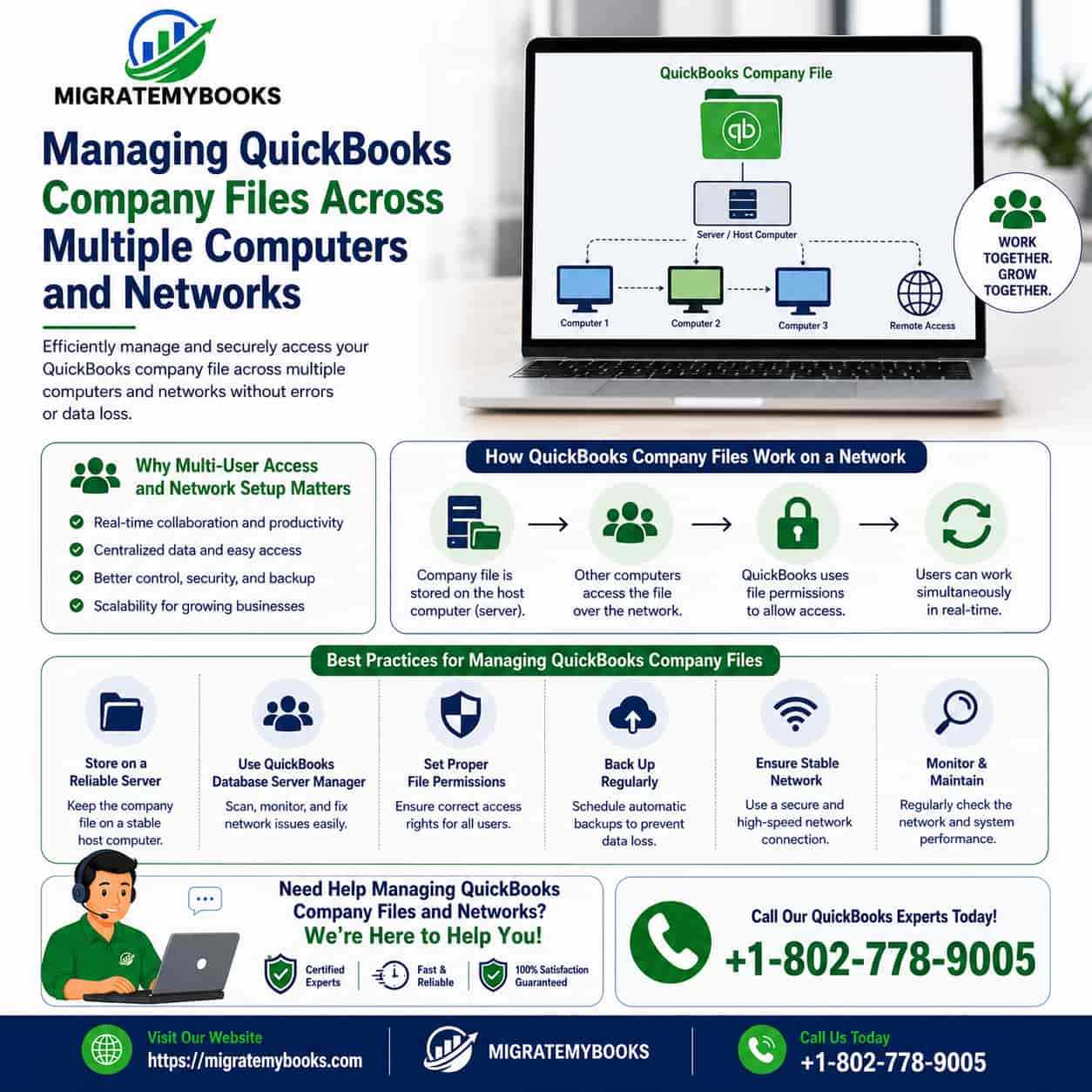
One of the most important components in a multi-user QuickBooks Desktop environment is database communication. When multiple employees access the same company file, the Database Server Manager plays a critical role in coordinating data exchange between workstations, shared folders, and the hosting system. Issues involving file accessibility, network communication, or background services can impact this connection. Understanding QuickBooks Database Server Manager Errors Complete helps businesses recognize how database-related problems occur, why communication failures happen, and which system areas should be reviewed when users experience connectivity or multi-user access challenges.
Understanding Database Server Manager
Businesses operating in multi-user mode rely heavily on QuickBooks Database Server Manager.
This background service allows multiple authorized users to work within the same company file simultaneously while maintaining data consistency.
Instead of allowing every workstation to access the company database independently, Database Server Manager coordinates communication between:
QuickBooks Desktop
Company files
Windows networking
Shared folders
Hosting computer
Connected workstations
This organized communication prevents conflicting changes when several employees are working at the same time.
For example:
One employee may create invoices.
Another processes payroll.
Another reviews financial reports.
Another records vendor payments.
Database Server Manager coordinates these activities so that every user works with current financial information.
Why Database Communication Is So Important
Without proper database management, accounting information could easily become inconsistent.
Database Server Manager helps:
Coordinate multiple users
Protect transaction integrity
Prevent conflicting updates
Improve company file accessibility
Manage workstation communication
Support shared accounting environments
This makes it one of the most important hidden systems supporting QuickBooks Desktop.
Multi-User Communication
As businesses expand, accounting responsibilities are often shared among multiple employees.
Typical users may include:
Accountants
Payroll administrators
Bookkeepers
Office managers
Business owners
Every workstation must communicate continuously with:
Hosting computer
Shared company file
Database Server Manager
Windows networking services
This communication occurs almost instantly during normal accounting work.
Whenever a user saves a transaction, QuickBooks immediately synchronizes the updated information so that other authorized users can access the latest financial records.
Reliable communication keeps accounting information accurate across the entire organization.
Common Factors That Affect Company File Accessibility
Because so many components work together, several factors influence how easily QuickBooks can access company data.
Storage Location
The software must always know where the company file is stored.
Businesses often save company files on:
Local computers
Dedicated servers
Shared network folders
External storage devices
If file locations change unexpectedly, QuickBooks may no longer locate the database.
Windows Permissions
Proper permissions determine whether users can:
Open company files
Save transactions
Create backups
Access shared folders
Even healthy company files may become inaccessible if permissions change.
Shared Folder Configuration
In multi-user environments, QuickBooks depends on correctly configured shared folders.
Improper sharing settings may interrupt:
File access
Multi-user communication
Database connectivity
Backup operations
Network Stability
A stable local network allows workstations to exchange information with the hosting computer quickly.
Poor connectivity may result in:
Delayed company file loading
Slow report generation
Interrupted user sessions
Communication failures
Maintaining reliable networking helps support uninterrupted accounting operations.
Protecting Company File Integrity
Since the company file contains essential financial information, businesses should follow preventive practices that reduce the risk of corruption or unexpected data loss.
Recommended practices include:
Create Regular Backups
Backups protect against:
Hardware failure
Data corruption
Accidental deletion
System upgrades
Unexpected shutdowns
Organize File Locations
Keeping company files in consistent, well-documented locations makes future maintenance and migration easier.
Monitor Storage Health
Reliable storage devices improve:
File opening speed
Transaction processing
Backup performance
Overall software responsiveness
Document System Changes
Whenever businesses replace computers, move servers, or reorganize shared folders, documenting configuration changes helps simplify troubleshooting later.
Understanding Company File Communication Problems
Many users assume company file errors always indicate damaged accounting data.
In reality, communication failures often occur because surrounding technologies cannot reach the company file correctly.
For example, QuickBooks Error 6000 107 is commonly associated with situations where QuickBooks Desktop has difficulty accessing a company file. While the message may appear file-specific, contributing factors often include incorrect file paths, permission restrictions, network interruptions, storage accessibility, or database communication problems.
Instead of focusing only on the company file itself, businesses should evaluate the complete communication path—from the QuickBooks application to Windows services, shared folders, Database Server Manager, and storage devices. This broader approach often reveals the underlying cause more effectively.
By understanding how company files, databases, and networks interact, organizations can build a more reliable accounting environment that supports secure collaboration, protects financial records, and reduces operational interruptions.
Why Internet Connectivity Matters in QuickBooks Desktop
Although QuickBooks Desktop stores most accounting information locally, many of its important features depend on reliable internet communication. Activities such as downloading software updates, updating payroll tax tables, validating licenses, connecting to online banking services, and accessing Intuit-hosted resources all require secure communication between QuickBooks Desktop and external servers.
Unlike creating invoices or recording transactions, these online features cannot function independently. They rely on Windows networking components, internet protocols, firewall rules, security certificates, and authentication services working together. If any of these supporting technologies fail, QuickBooks may be unable to complete online operations even though local accounting functions continue to work normally.
Understanding this communication process helps businesses recognize that many update or connectivity issues originate from the surrounding system rather than from QuickBooks Desktop itself.
How QuickBooks Communicates with Online Services
Whenever QuickBooks performs an online task, it follows a structured communication sequence before information is exchanged securely.
A typical process includes:
Checking the availability of the internet connection.
Resolving the destination server through Windows networking services.
Establishing a secure encrypted connection.
Verifying digital certificates.
Authenticating the QuickBooks installation.
Requesting update or payroll information.
Downloading required data.
Confirming successful communication.
Applying updates or displaying the requested information.
This process occurs automatically and usually finishes within a few moments. However, because several technologies are involved, communication can fail if one component is unavailable or incorrectly configured.
Windows Components That Support Online Communication
QuickBooks Desktop relies heavily on Microsoft Windows to manage internet communication.
Important Windows networking components include:
Internet Protocol (TCP/IP)
TCP/IP allows QuickBooks Desktop to exchange information with external servers by sending and receiving data packets over the internet.
Reliable TCP/IP communication supports:
Product updates
Payroll downloads
License verification
Banking services
Secure authentication
DNS Resolution
Before QuickBooks can communicate with an online service, Windows must translate the server name into a network address.
This process is handled by the Domain Name System (DNS).
If DNS resolution fails, QuickBooks may not reach update servers even when the internet connection appears normal.
Secure Socket Layer (SSL) and TLS Encryption
QuickBooks protects sensitive financial information by using encrypted communication protocols.
Encryption helps secure:
Payroll information
License verification
Banking communication
Software updates
Authentication requests
These protocols help prevent unauthorized access while data travels across the internet.
Digital Certificates
Digital certificates confirm that QuickBooks is communicating with trusted servers rather than unauthorized systems.
Windows automatically verifies these certificates before allowing secure communication to continue.
If certificates become invalid or outdated, secure connections may fail.
Firewalls and Security Software
Every business should protect financial information with appropriate security measures. However, security software must also allow QuickBooks Desktop to communicate with the online services it requires.
Firewalls, antivirus applications, and endpoint protection software monitor network activity to block suspicious communication.
If configured too aggressively, they may unintentionally restrict legitimate QuickBooks processes.
Potential effects include:
Interrupted software updates
Payroll download failures
License verification issues
Online banking connection problems
Delayed communication with secure servers
Regularly reviewing firewall rules and security settings helps balance protection with application functionality.
Understanding QuickBooks Error 12009
One communication-related issue businesses may encounter is QuickBooks Error 12009.
This error commonly appears when QuickBooks Desktop cannot successfully establish communication with the online services required for updates, payroll, or product validation.
Although the message appears during internet-based operations, it often reflects broader communication problems rather than an issue with accounting data.
Several factors may contribute, including:
Unstable internet connectivity
Incorrect firewall configuration
Proxy server restrictions
Security software interference
Windows internet settings
Network communication interruptions
Instead of assuming the software itself is malfunctioning, businesses should review the complete communication path between QuickBooks Desktop, Windows networking services, and external servers.
A structured review often helps identify whether the interruption originates from local system settings, internet infrastructure, or security controls.
Understanding QuickBooks Error 12037
Keeping QuickBooks Desktop updated is important for maintaining compatibility, improving security, and supporting reliable performance.
During an update, the software communicates with update servers to verify the installed version and download new program components.
QuickBooks Error 12037 is generally associated with interruptions during this communication process.
Possible contributing factors include:
Network instability
Firewall restrictions
Internet configuration problems
Windows networking issues
Security software blocking communication
Temporary server communication interruptions
Rather than focusing only on the displayed error code, businesses should evaluate the overall update environment.
Reviewing internet stability, administrator permissions, Windows networking components, and firewall settings provides a more complete understanding of the situation.
Best Practices for Maintaining Reliable Internet Communication
Businesses can reduce connectivity-related interruptions by following consistent maintenance practices.
Maintain a Stable Internet Connection
Reliable internet access supports uninterrupted communication with update servers, payroll services, and licensing systems.
Regular monitoring helps identify network instability before it affects accounting operations.
Keep Windows Networking Components Updated
Installing Windows updates helps maintain compatibility between QuickBooks Desktop and the operating system's networking services.
Updated components often improve security, communication reliability, and software compatibility.
Review Firewall and Antivirus Settings
Security software should protect business systems without blocking trusted QuickBooks communication.
Periodic reviews help ensure legitimate network traffic remains available while maintaining strong security practices.
Verify Administrator Permissions
Many update operations require elevated Windows permissions.
Using appropriate administrator access when performing software maintenance helps reduce installation and update interruptions.
Test Online Services Before Major Updates
Before installing significant QuickBooks updates, businesses should confirm:
Internet connectivity is stable.
Windows networking is functioning correctly.
Security software is not blocking communication.
Backup files have been created successfully.
Preparing the environment before making changes helps minimize unexpected downtime.
Building a Reliable Connected Environment
QuickBooks Desktop performs best when local systems, network infrastructure, Windows services, and online communication work together seamlessly.
Reliable internet connectivity supports more than software updates—it also strengthens payroll services, product verification, secure authentication, and long-term software stability.
Understanding how QuickBooks communicates with external services enables businesses to troubleshoot more effectively and make informed decisions when connectivity problems arise. Rather than treating issues such as QuickBooks Error 12009 or QuickBooks Error 12037 as isolated software faults, organizations can view them as indicators to evaluate the broader communication environment, ensuring smoother accounting operations and improved business continuity.
Software performance is not determined by QuickBooks Desktop alone. The overall accounting environment, including hardware resources, Windows configuration, storage performance, network reliability, and security settings, directly influences how efficiently the software operates. Businesses that want consistent performance should focus on creating a balanced setup where every supporting component works together effectively. Following principles from QuickBooks Desktop Performance & Reliability Guide: Build a Stable Accounting Environment allows organizations to improve system responsiveness, reduce interruptions, and maintain smoother accounting workflows even as company files and transaction volumes continue to grow.



Write a comment ...