
QuickBooks Desktop remains an important accounting solution for many businesses that need reliable control over financial records, payroll processing, invoicing, reporting, inventory tracking, and daily transaction management. While users primarily interact with invoices, reports, and company files, a complex technical environment works behind the application to ensure smooth performance.
A stable QuickBooks Desktop environment depends on multiple connected systems, including Windows services, database components, storage infrastructure, network communication, security settings, and online services. When these components operate correctly, businesses can manage accounting activities efficiently. However, when one part of this environment becomes unstable, users may experience slow performance, connection interruptions, update failures, or company file access problems.
Many QuickBooks Desktop issues are not caused by the application alone. Instead, they often result from communication problems between different system layers. Understanding how these components interact allows businesses to identify the actual source of problems and maintain a more reliable accounting environment.
This guide explains the essential practices required to keep QuickBooks Desktop stable, secure, and ready for daily business operations while covering troubleshooting concepts, migration considerations, connectivity management, and long-term maintenance strategies.
Why QuickBooks Desktop Stability Matters for Businesses
Accounting systems handle some of the most important information within an organization.
QuickBooks Desktop manages:
Customer transactions
Vendor records
Payroll information
Banking activities
Tax-related data
Financial reports
Inventory records
Any interruption affecting this information can influence business decisions and daily operations.
A reliable QuickBooks environment helps businesses:
Access financial records quickly
Maintain accurate reporting
Process transactions consistently
Reduce unexpected interruptions
Protect sensitive accounting data
As businesses grow, maintaining stability becomes more important because company files become larger, more users require access, and more services depend on communication between different systems.
Understanding the QuickBooks Desktop Environment
QuickBooks Desktop operates through several connected layers rather than functioning as a single standalone application.
These layers include:
QuickBooks Application Files
The main program files control:
User interface operations
Transaction processing
Reporting functions
Accounting workflows
Company File Database
The company file stores important business information, including:
Customers
Vendors
Employees
Transactions
Accounts
Reports
Windows Operating System
Windows provides the foundation that allows QuickBooks components to run.
It manages:
File permissions
Security controls
System services
Hardware communication
Database Server Manager
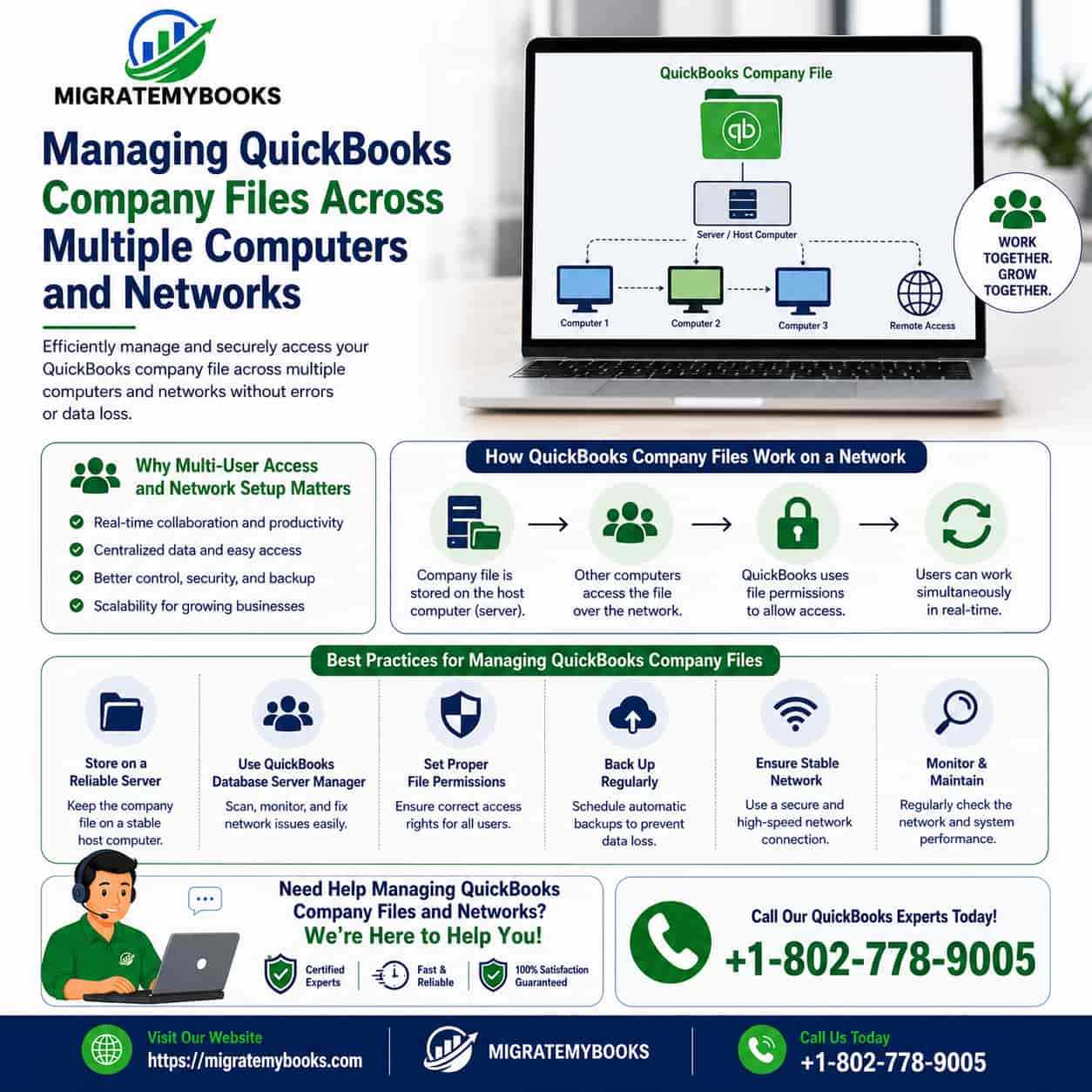
This component enables multiple users to access company files in shared environments.
Network Infrastructure
Networks allow communication between:
Workstations
Servers
Shared folders
Database services
Online Communication Services
Some QuickBooks features require internet connectivity for:
Updates
License validation
Payroll services
Connected applications
A stable accounting environment requires all these layers to communicate correctly.
The Company File: The Foundation of Accounting Operations
The company file is the center of QuickBooks Desktop activity.
It contains critical financial information such as:
Sales transactions
Expense records
Customer balances
Vendor payments
Payroll history
Banking details
Financial statements
Because so much information depends on the company file, maintaining its health is essential.
A company file does not work independently. It relies on:
Storage accessibility
Windows permissions
Database services
Network communication
Backup availability
If any supporting component experiences problems, QuickBooks may have difficulty opening or processing the company file.
Managing Company File Accessibility
QuickBooks Desktop users often work in environments where company files are stored on:
Local computers
Office servers
Shared network locations
The location of the company file affects performance and accessibility.
A properly configured environment should include:
Correct folder permissions
Reliable storage hardware
Stable network communication
Proper hosting settings
Regular backups
For example, QuickBooks Error 6000 107 is commonly associated with situations where QuickBooks cannot properly access or communicate with a company file. Although the exact cause may vary, possible factors can include file location problems, permission restrictions, network communication issues, or problems with the hosting environment.
Understanding the complete file access process helps businesses investigate the surrounding system instead of assuming the company file itself is the only problem.
Windows Components That Support QuickBooks Desktop
QuickBooks Desktop depends on several Windows technologies to function properly.
Important supporting components include:
Microsoft .NET Framework
This provides important functionality required by many QuickBooks features.
Problems with .NET Framework may affect:
Installation
Program operation
Updates
System communication
Microsoft Visual C++ Components
These libraries allow QuickBooks program modules to operate correctly within Windows.
Missing or damaged components may create application stability problems.
Microsoft MSXML
MSXML supports structured data processing and communication between software components.
Windows Installer
Windows Installer manages:
Program installation
Repairs
Updates
Software maintenance
Windows Security Permissions
Windows controls access to:
Files
Folders
Applications
Network resources
Incorrect permissions can prevent QuickBooks from performing normal operations.
Keeping Windows components updated helps maintain compatibility and improves overall reliability.
Database Server Manager and Multi-User Performance
Businesses with multiple employees often rely on QuickBooks Desktop multi-user mode.
Database Server Manager plays a major role by managing communication between users and the company file.
Its responsibilities include:
Hosting company files
Managing database requests
Coordinating multiple users
Preventing conflicting changes
Maintaining data access
A properly configured database environment improves:
File accessibility
User productivity
Transaction processing
System stability
Problems with database communication can affect everyone connected to the company file.
Regularly reviewing hosting settings and database services helps maintain consistent performance.
Network Communication and Daily Accounting Operations
A reliable network is essential for businesses using shared QuickBooks Desktop environments.
Daily accounting activities often require communication between:
Employee computers
Hosting systems
Database services
Shared folders
Security applications
Network issues may result from:
Incorrect permissions
Firewall restrictions
Connection instability
Server configuration changes
Hardware problems
A strong network foundation reduces interruptions and supports faster access to accounting information.
Protecting QuickBooks Desktop Through Security Management
Security is a critical part of maintaining a reliable accounting environment.
QuickBooks Desktop stores sensitive business information, including:
Financial records
Payroll details
Customer data
Vendor information
Security controls help protect this information through:
User permissions
Firewall protection
Antivirus monitoring
Windows security settings
Access restrictions
However, security tools must be configured correctly.
Overly restrictive settings may block legitimate QuickBooks communication and affect normal operations.
A balanced security approach protects data while allowing QuickBooks services to function properly.
Preparing for Long-Term Reliability
A stable QuickBooks Desktop environment requires ongoing attention.
Businesses should regularly review:
Software updates
Windows health
Storage capacity
Network performance
Backup status
Security settings
User permissions
Preventive maintenance reduces the possibility of unexpected interruptions and creates a stronger foundation for future business growth.
Secure Internet Communication and QuickBooks Desktop Reliability
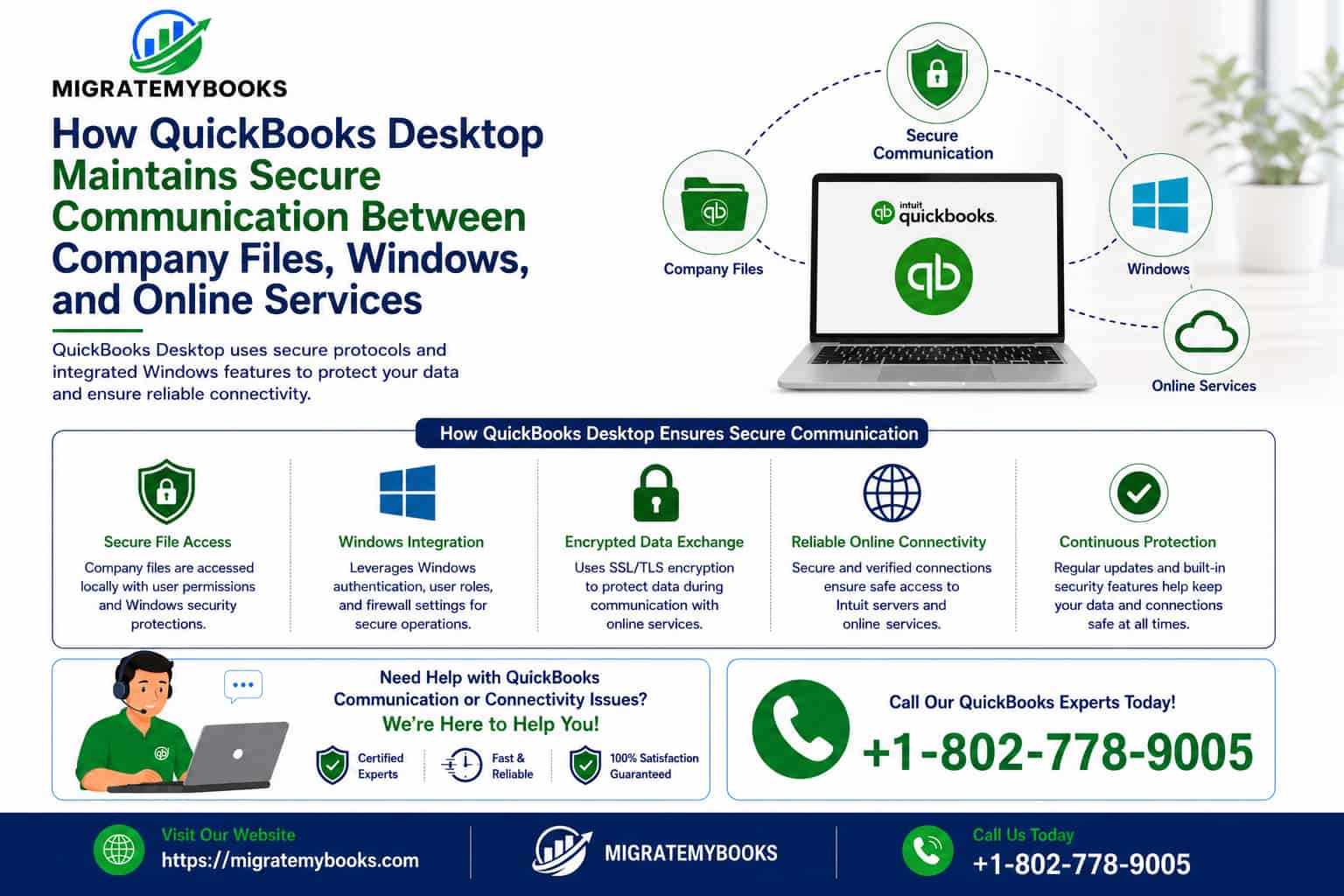
Although QuickBooks Desktop is installed locally on business computers, many important features depend on secure internet communication. Modern accounting environments require QuickBooks to communicate with external services for updates, verification, payroll-related activities, and connected applications.
This communication involves several systems working together, including:
QuickBooks Desktop application files
Windows network settings
Internet connections
Security software
Firewall configurations
Online service servers
When these communication pathways work properly, QuickBooks can complete online tasks smoothly. However, interruptions in connectivity or security restrictions can prevent services from functioning correctly.
Maintaining secure communication requires more than having an active internet connection. Businesses must also ensure that:
Firewall rules allow required QuickBooks communication
Security software does not block legitimate processes
Windows permissions are correctly configured
Network connections remain stable
System components remain updated
A reliable communication environment improves both security and daily accounting performance.
How Internet Connectivity Affects QuickBooks Operations
QuickBooks Desktop relies on internet connectivity for several important functions.
These include:
Software Updates
Updates help improve:
Security protection
Compatibility
Performance
Feature reliability
During an update, QuickBooks communicates with update servers to download and install required files.
If communication is interrupted, users may experience incomplete downloads or update failures.
License Verification
QuickBooks periodically verifies product information and subscription details through online communication.
Problems with this process may occur when:
Internet access is unstable
Firewall settings block communication
Security software restricts connections
Windows settings prevent access
Connected Services
Many businesses use connected QuickBooks features, including:
Banking services
Payment processing
Online applications
Payroll-related services
These features depend on secure communication between local systems and external services.
Understanding QuickBooks Error 12009: Internet Communication Problems
One example of a connectivity-related issue is QuickBooks Error 12009.
This error may appear when QuickBooks experiences difficulty communicating with required online services.
Possible contributing factors include:
Incorrect internet settings
Firewall restrictions
Security software interference
Network configuration problems
Browser or Windows communication settings
Instead of focusing only on the error message, businesses should evaluate the complete communication path.
Important areas to review include:
Internet stability
QuickBooks connection settings
Firewall permissions
Windows configuration
Security policies
Understanding how QuickBooks communicates with online services helps identify whether the problem is related to connectivity, system configuration, or external restrictions.
Update Communication and QuickBooks Desktop Maintenance
Keeping QuickBooks Desktop updated is an important part of maintaining reliability.
Updates may include improvements related to:
Application stability
Security features
Compatibility
Performance enhancements
However, the update process requires successful communication between multiple components.
These include:
QuickBooks program files
Windows services
Microsoft components
Internet connections
Security systems
When one component interrupts the update process, installation problems may occur.
QuickBooks Error 12037: Secure Update Communication Challenges
QuickBooks Error 12037 is commonly associated with communication difficulties during online update processes.
The issue may involve problems with:
Secure server communication
Internet configuration
Firewall settings
Network restrictions
System security policies
A structured troubleshooting approach should examine:
Whether the internet connection is stable.
Whether QuickBooks has proper communication permissions.
Whether security software is blocking update processes.
Whether Windows components are functioning correctly.
By reviewing the entire update environment, businesses can better understand why communication failures occur.
QuickBooks Error 15227: Update and System Configuration Issues
Software updates depend on proper communication between QuickBooks, Windows, and online services.
QuickBooks Error 15227 may appear in situations involving:
Update installation problems
Windows configuration issues
Damaged system components
Interrupted update processes
Maintaining a healthy update environment requires:
Updated Windows components
Reliable internet access
Proper administrator permissions
Functional security settings
Regular maintenance reduces the possibility of update interruptions and helps QuickBooks remain compatible with the operating environment.
Payroll Communication and Data Synchronization
Payroll is one of the most sensitive areas within QuickBooks Desktop because it requires accurate synchronization between multiple systems.
Payroll operations depend on:
Employee records
Tax information
Payroll subscriptions
Update services
Compliance-related information
A successful payroll process requires communication between local QuickBooks components and external payroll services.
If synchronization fails, businesses may experience:
Incorrect payroll information
Missing updates
Processing interruptions
Incomplete payroll records
Maintaining reliable communication is essential for accurate payroll management.
Planning QuickBooks Desktop Migration Carefully
Migration is another area where stability and security are extremely important.
Businesses may migrate QuickBooks Desktop because of:
Computer replacement
Server upgrades
Office relocation
Hardware improvements
Windows upgrades
Storage changes
A successful migration requires more than transferring the company file.
It requires preserving the complete accounting environment.
Important Steps for a Reliable Migration
Review Existing Environment
Before migration, document:
Company file locations
User permissions
Hosting settings
Network configuration
Connected services
Backup procedures
This information helps rebuild the environment correctly.
Create Verified Backups
Before moving any accounting data:
Create a complete backup
Verify backup availability
Store backup copies securely
A verified backup provides protection if unexpected problems occur during migration.
Transfer Company Files Correctly
During migration, businesses should confirm:
Company files are copied completely
Supporting files are transferred properly
File permissions are maintained
Storage locations are accessible
Test After Migration
After moving QuickBooks Desktop, verify:
Company file access
Multi-user functionality
Reports
Payroll operations
Online communication
Backup processes
Testing prevents hidden issues from affecting daily operations.
Network Configuration After Migration
A migration may change the way QuickBooks communicates with systems.
Businesses should review:
Hosting configuration
Shared folder permissions
Firewall settings
Database Server Manager
Network paths
Incorrect settings after migration may create company file access issues.
A properly configured network helps maintain consistent performance.
Company File Communication and Data Protection
Company files depend on communication between:
QuickBooks Desktop
Windows permissions
Storage systems
Database services
Network environments
When these connections remain healthy, users can access accounting information efficiently.
However, disruptions may occur when:
Storage locations change
Permissions are modified
Network connections fail
Database services stop
Understanding these relationships helps businesses identify the real cause of problems.
QuickBooks Error 6000 301: Company File Communication Challenges
QuickBooks Error 6000 301 is often associated with company file access and communication issues.
Possible contributing factors include:
Network configuration problems
File accessibility restrictions
Storage issues
Database communication failures
A complete review should include:
Company file location
Network accessibility
Folder permissions
Hosting settings
Database services
Rather than assuming the company file is damaged, businesses should evaluate the entire environment supporting file access.
Improving Daily QuickBooks Desktop Performance
Long-term performance depends on maintaining every part of the accounting environment.
Businesses can improve reliability by:
Keeping QuickBooks updated
Maintaining Windows performance
Monitoring storage health
Reviewing network reliability
Protecting company files
Maintaining secure communication
Small improvements in daily maintenance can significantly reduce future disruptions.
Creating a Reliable Technical Foundation
A dependable QuickBooks Desktop environment requires coordination between multiple areas:
Software Management
Maintain:
Current QuickBooks versions
Updated Windows components
Compatible system configurations
Data Management
Protect:
Company files
Backups
Transaction history
Network Management
Monitor:
Connectivity
Permissions
Hosting settings
Security Management
Review:
Firewall rules
Antivirus settings
User access controls
Together, these practices create a stronger foundation for daily accounting operations.
Maintaining Company File Health for Long-Term Reliability
The company file is the most important part of any QuickBooks Desktop environment. It contains years of financial information, including transactions, customer records, payroll details, inventory history, and reporting data.
As businesses continue operating, company files naturally become larger and more complex. Without proper maintenance, performance may gradually decrease, and users may experience slower processing, file access problems, or unexpected interruptions.
Maintaining company file health involves:
Regular backups
Data verification
Monitoring file size
Reviewing storage conditions
Maintaining proper permissions
Avoiding unnecessary file movement
A healthy company file provides the foundation for reliable accounting operations.
Understanding QuickBooks Error 6150: Company File Reliability Issues
QuickBooks Error 6150 is one example of an issue that may involve company file access, file creation, or data structure problems.
This type of error may appear when QuickBooks encounters difficulties with:
Company file accessibility
File configuration
Damaged data structures
Incorrect file locations
System environment changes
When investigating this type of problem, businesses should evaluate the complete environment surrounding the company file.
Important areas include:
Recent system changes
Backup availability
Storage reliability
File permissions
QuickBooks configuration
A structured review helps determine whether the issue is related to the company file itself or the supporting systems that allow QuickBooks to operate.
Backup and Recovery Planning for Business Continuity
A reliable backup strategy is essential for protecting accounting information.
Backups help businesses recover from:
Hardware failures
Accidental deletion
Software conflicts
Data corruption
Unexpected system changes
A strong backup plan should include several important practices.
Create Regular Backups
Backup frequency should match business activity.
Organizations with frequent transactions may require more frequent backups compared to businesses with lower accounting activity.
Maintain Multiple Backup Locations
Keeping backups in different locations improves protection.
Businesses may consider:
Local backup storage
External storage devices
Secure remote storage
Multiple copies reduce the risk of losing important accounting information.
Test Backup Restoration
A backup should always be tested.
Successful restoration testing confirms that:
Backup files are complete
Data can be recovered
Recovery procedures are effective
A backup strategy is only valuable when restoration is possible.
Improving QuickBooks Desktop Performance
Performance issues often develop slowly as businesses grow.
Common causes include:
Increasing company file size
Limited storage space
Network congestion
Outdated system components
Excessive background applications
Improving performance requires attention to the complete environment.
Optimize Storage Performance
Storage directly affects how quickly QuickBooks can process accounting information.
Businesses should monitor:
Available disk space
Storage device health
File locations
Backup storage capacity
Reliable storage improves:
File opening speed
Report generation
Transaction processing
Using appropriate storage solutions helps maintain consistent performance.
Maintain Efficient Network Infrastructure
For businesses using multi-user QuickBooks Desktop environments, network performance is critical.
A reliable network supports:
Faster company file access
Better user collaboration
Stable database communication
Reduced connection interruptions
Businesses should regularly review:
Network hardware
Server performance
Shared folder settings
User permissions
Connection stability
A properly maintained network reduces many common communication problems.
Security Practices for a Stable QuickBooks Environment
Security and reliability work together.
QuickBooks Desktop stores confidential business information, making protection essential.
Important security practices include:
Manage User Permissions
Users should only have access to the information required for their responsibilities.
Proper permissions help protect:
Financial records
Payroll information
Customer data
Review Firewall Configuration
Firewalls protect systems by controlling communication.
However, incorrect settings may prevent QuickBooks from communicating with:
Database services
Online services
Network resources
Regular reviews help maintain the balance between protection and functionality.
Maintain Antivirus Compatibility
Security software should protect the system without unnecessarily blocking QuickBooks operations.
Businesses should monitor whether antivirus settings affect:
Program files
Database services
Update processes
Network communication
Preventing Future QuickBooks Desktop Problems
The best way to maintain reliability is to prevent issues before they occur.
Preventive maintenance includes:
Updating QuickBooks regularly
Keeping Windows components current
Monitoring system performance
Maintaining backups
Reviewing security settings
Documenting configurations
Testing recovery procedures
A proactive approach reduces unexpected interruptions and improves business continuity.
QuickBooks Desktop Maintenance Checklist
Businesses can use the following checklist to maintain a stable accounting environment.
Daily Tasks
✔ Confirm backup completion
✔ Monitor unusual system behavior
✔ Verify important accounting activities
Weekly Tasks
✔ Review storage availability
✔ Check network performance
✔ Confirm company file accessibility
✔ Monitor database services
Monthly Tasks
✔ Install QuickBooks updates
✔ Apply Windows updates
✔ Review firewall settings
✔ Check security configurations
Quarterly Tasks
✔ Test backup restoration
✔ Review user permissions
✔ Evaluate hardware performance
✔ Review migration and recovery plans
Following a structured maintenance schedule helps organizations maintain predictable performance.
Preparing QuickBooks Desktop for Business Growth
Growing businesses place increasing demands on their accounting systems.
Expansion may introduce:
More employees
Larger transaction volumes
Additional workstations
More payroll activity
Advanced reporting requirements
A scalable QuickBooks environment requires planning.
Businesses should consider:
Hardware upgrades
Network improvements
Storage expansion
User access management
Backup improvements
Preparing early helps prevent performance issues as operational requirements increase.
Understanding QuickBooks Desktop as a Complete System
QuickBooks Desktop reliability depends on many connected technologies working together.
These include:
Windows services
Company file databases
Database Server Manager
Network infrastructure
Storage systems
Internet communication
Security controls
Backup solutions
A problem in any one area can influence overall performance.
For example:
A network problem can affect company file access.
A security restriction can affect online communication.
A storage issue can affect performance.
A Windows component problem can affect updates.
Understanding these relationships allows businesses to troubleshoot more effectively.
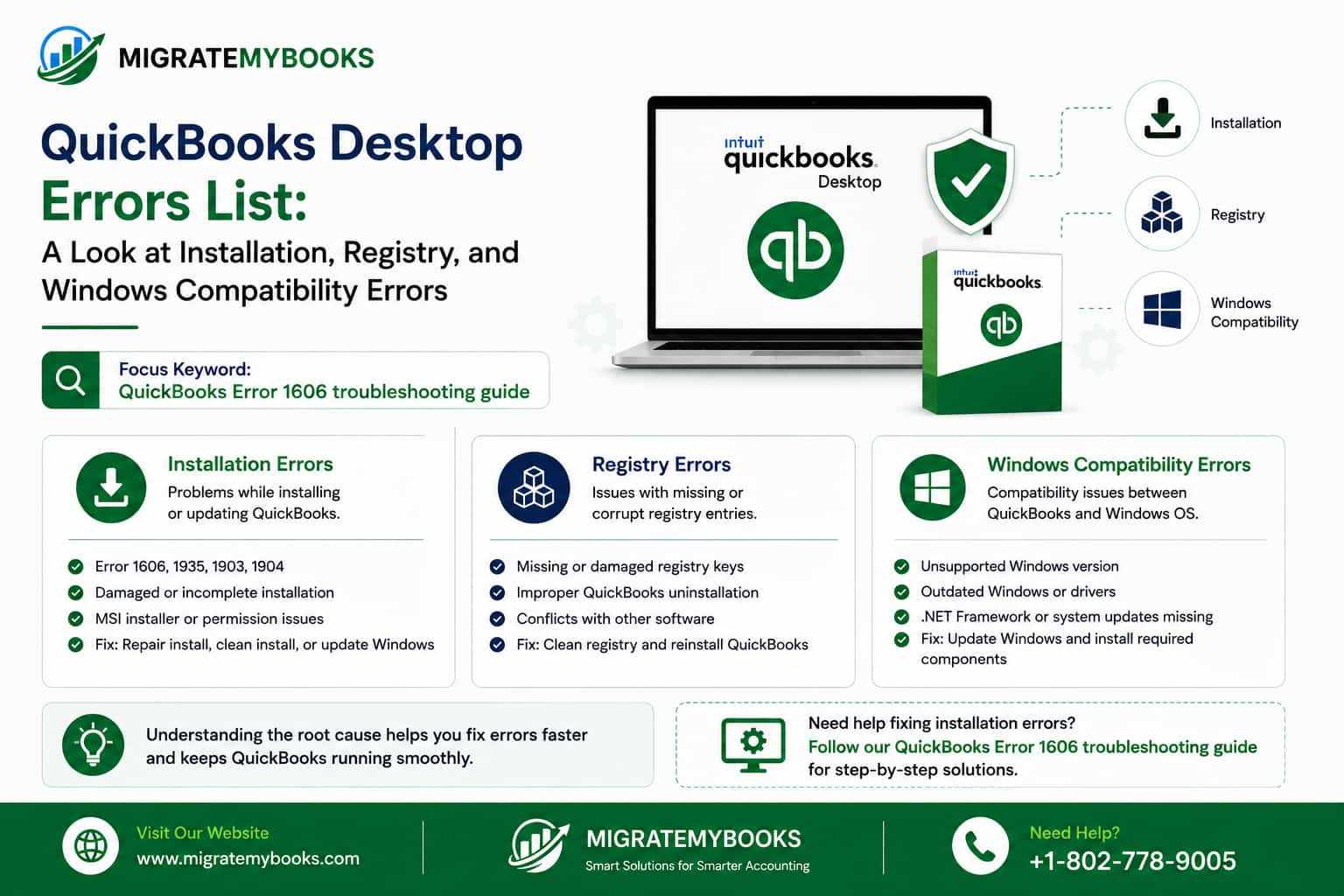
Maintaining a reliable QuickBooks Desktop environment requires a complete understanding of how different software components, system services, and troubleshooting methods work together. The Complete Guide to Common QuickBooks Errors: Causes, Fixes, and Troubleshooting Solutions provides a broader perspective on why issues occur by connecting error messages with underlying causes such as network communication failures, company file accessibility problems, update interruptions, and configuration conflicts. Instead of treating each error as an isolated event, businesses can improve problem resolution by understanding the systems responsible for supporting daily accounting operations.
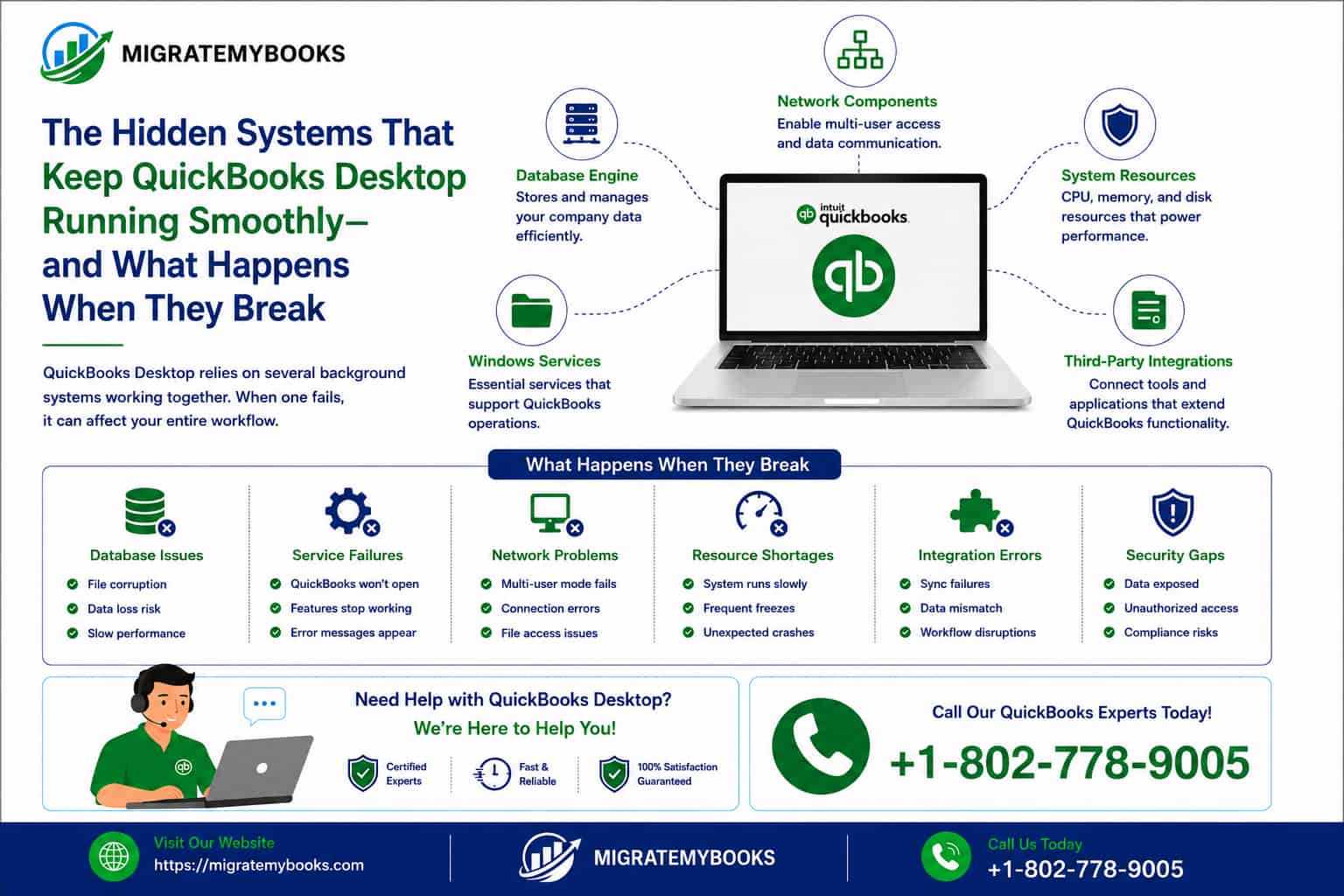
Behind every successful QuickBooks Desktop workflow are multiple background processes that manage data access, security, communication, and performance. Exploring Behind QuickBooks Desktop System Services & Data Reliability helps explain how Windows services, database management, storage systems, and network environments influence the overall stability of accounting operations. When these components remain properly configured and maintained, businesses can reduce disruptions and create a more dependable environment for managing financial information.
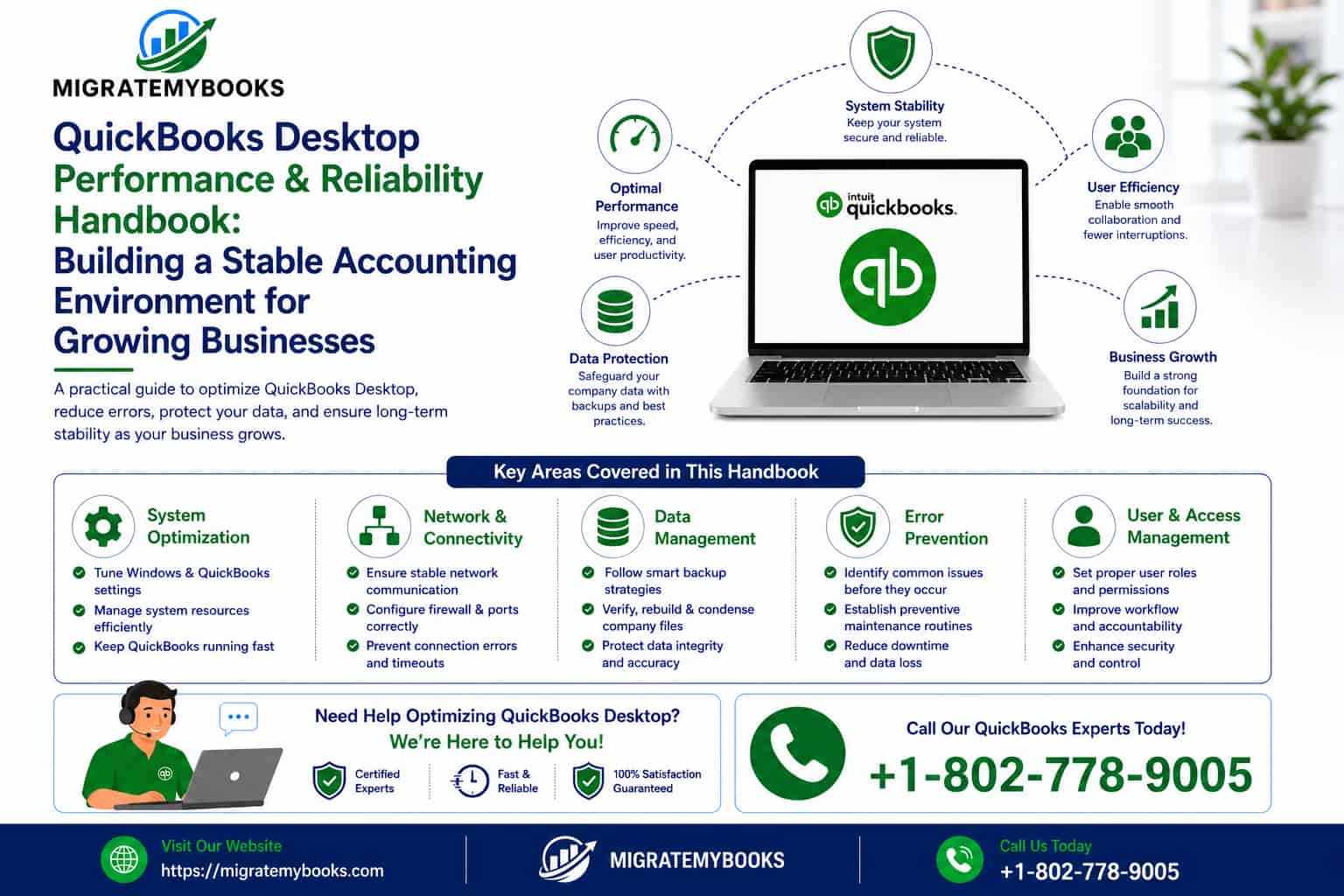
A proactive maintenance approach also plays an important role in long-term software performance. Following a structured QuickBooks Desktop Performance & Reliability Guide: Build a Stable Accounting Environment allows organizations to focus on preventive practices such as regular backups, system monitoring, secure communication, proper permissions, and planned migrations. By combining troubleshooting knowledge with reliable infrastructure management, businesses can improve QuickBooks Desktop performance and maintain consistent accounting operations as their needs continue to grow.
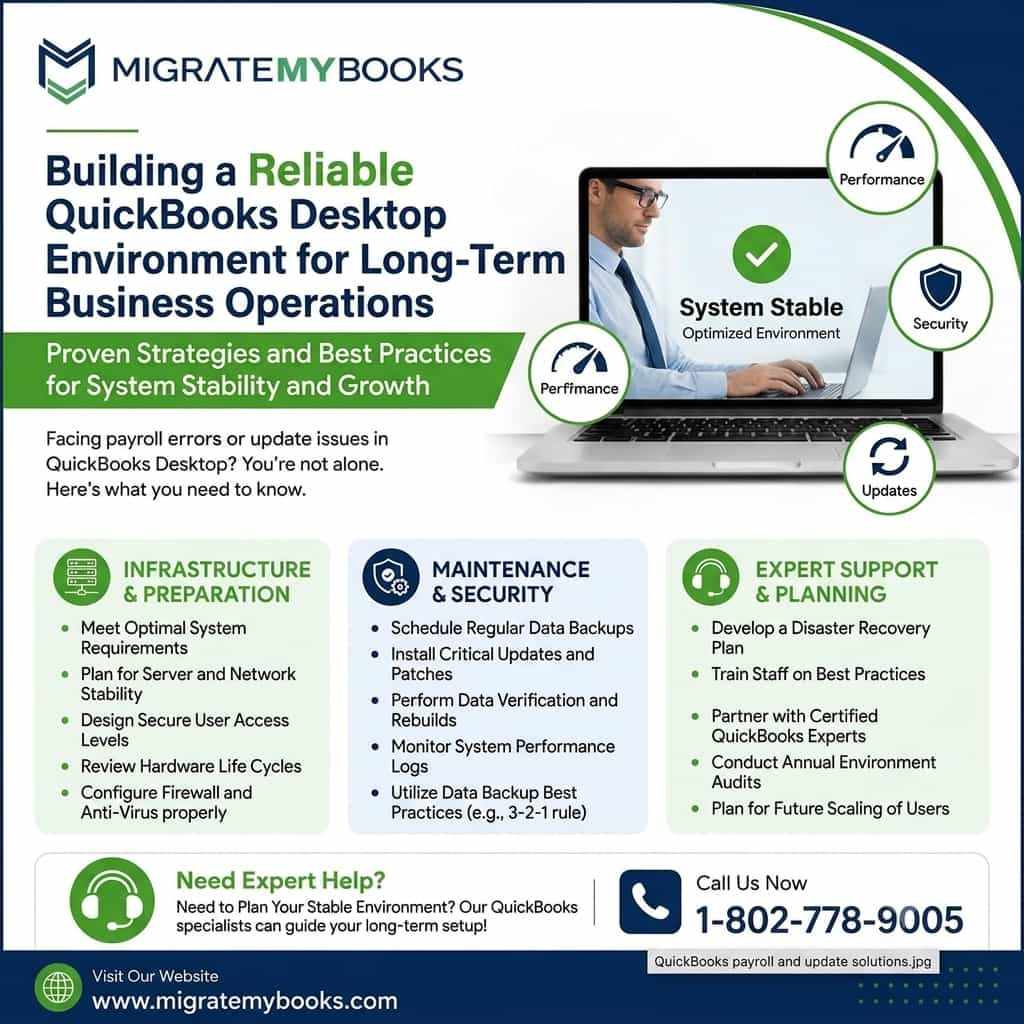
Building a Stable QuickBooks Desktop Environment
A reliable accounting environment is built through consistent management.
Key principles include:
Maintain Updated Systems
Keep:
QuickBooks Desktop updated
Windows components current
Security software maintained
Protect Financial Data
Use:
Reliable backups
Secure storage
Controlled permissions
Monitor Communication
Review:
Network connections
Online services
Database communication
Plan Changes Carefully
Before:
Migrating systems
Replacing hardware
Changing networks
businesses should evaluate the potential impact on QuickBooks operations.
Final Thoughts
QuickBooks Desktop stability depends on much more than the accounting application itself. Behind every transaction, report, payroll process, and company file operation is a connected environment of Windows services, database systems, storage infrastructure, networking, security controls, and online communication.
Understanding how these components interact helps businesses approach problems more effectively. Issues such as QuickBooks Error 12009, QuickBooks Error 6000 107, QuickBooks Error 12037, QuickBooks Error 15227, QuickBooks Error 6150, and QuickBooks Error 6000 301 are easier to analyze when viewed as system communication or configuration challenges rather than isolated error messages.
A stable QuickBooks Desktop environment requires continuous attention to software updates, company file health, secure communication, network reliability, backup protection, and preventive maintenance.
By building a structured approach to system management, businesses can reduce interruptions, protect financial information, improve troubleshooting efficiency, and keep QuickBooks Desktop ready for reliable daily accounting operations as their organization continues to grow.



Write a comment ...