
QuickBooks Desktop has long been a trusted accounting solution for businesses that need reliable financial management, payroll processing, inventory tracking, invoicing, and detailed reporting. While most users focus on entering transactions or generating reports, the software depends on a sophisticated infrastructure operating behind the scenes. Windows services, database components, company files, network communication, internet connectivity, and security settings all work together to create a stable accounting environment.
As businesses grow, their QuickBooks Desktop environment becomes increasingly complex. Larger company files, additional users, expanding payroll responsibilities, and more connected services place greater demands on both the software and the supporting Windows environment. Without proper maintenance, these growing demands can affect application performance, communication between components, and overall reliability.
Rather than treating every error message as an isolated technical issue, understanding how QuickBooks Desktop operates as an integrated system allows businesses to troubleshoot more effectively. A strong foundation built on healthy infrastructure, reliable networking, secure data management, and proactive maintenance helps reduce unexpected interruptions while supporting long-term business growth.
This handbook explains how QuickBooks Desktop maintains stability, how different software components interact, and why maintaining the overall environment is just as important as maintaining the application itself.
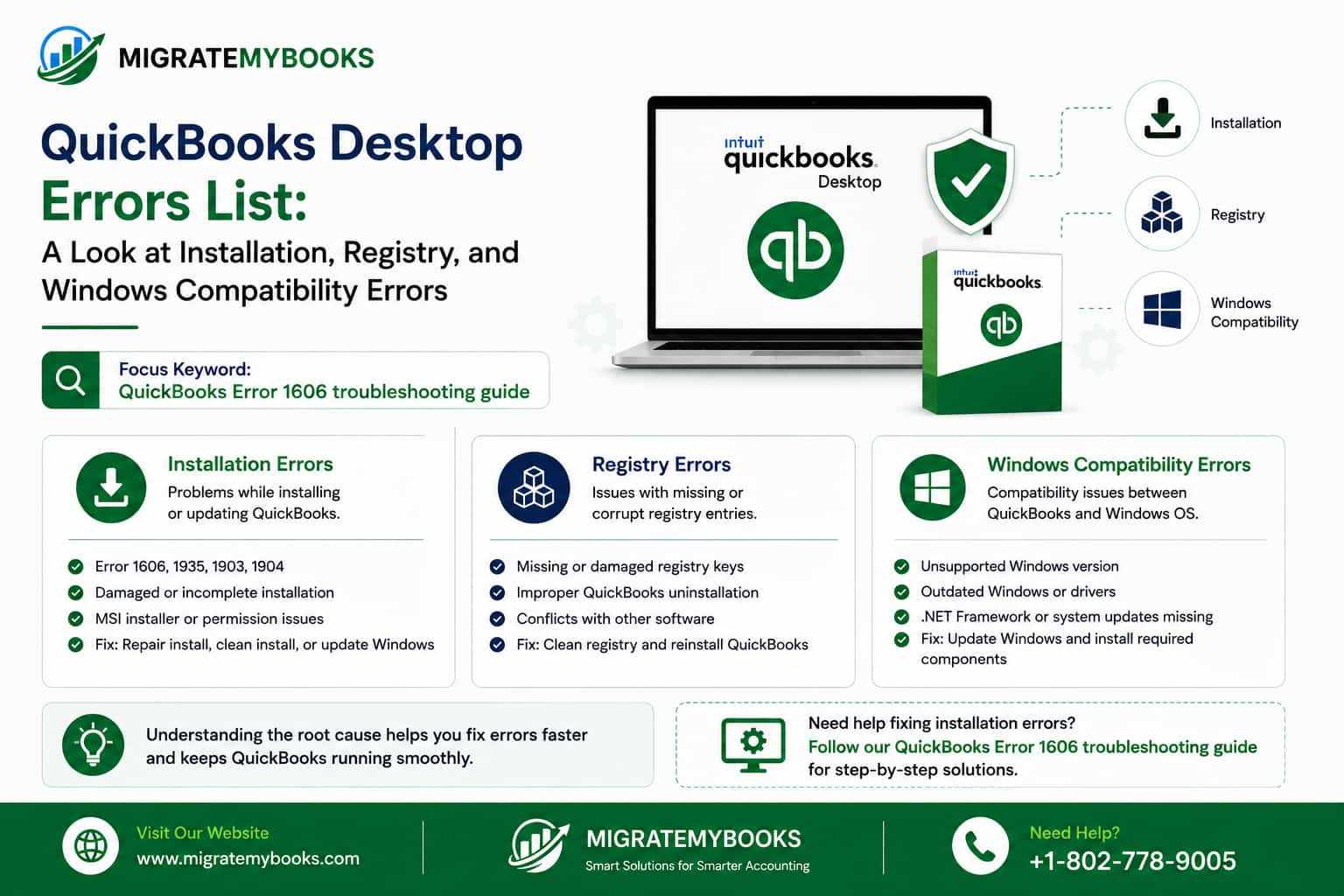
Maintaining a reliable accounting environment requires understanding the technical reasons behind software disruptions. Why Financial Software Fails: Common Technical Problems can often be explained through issues related to system communication, outdated components, network instability, security restrictions, storage limitations, or data management challenges. Financial applications like QuickBooks Desktop depend on multiple connected technologies working together, and a failure in one area can affect updates, company file access, payroll processing, or reporting accuracy. Recognizing these underlying causes allows businesses to move beyond temporary fixes and focus on improving overall system stability.
Understanding the Architecture Behind QuickBooks Desktop
QuickBooks Desktop is far more than a single accounting program. It is a collection of interconnected software components that continuously communicate with one another.
Core components include:
Windows operating system
Company file database
Database Server Manager
Microsoft system frameworks
Storage devices
Network communication
Internet services
Security permissions
Backup systems
Each accounting activity depends on several of these components operating together successfully.
For example, opening a company file requires Windows to verify permissions, locate the file, establish database communication, confirm storage accessibility, and load financial records before users can begin working.
Because these components depend on one another, a problem in one area can influence many different QuickBooks functions.
The Company File: The Heart of the Accounting Environment
Every business record maintained inside QuickBooks Desktop is stored within the company file.
Typical information includes:
Customer accounts
Vendor information
Payroll records
Banking transactions
Inventory data
Sales history
Financial reports
Tax information
As organizations continue growing, the company file becomes larger and more complex. Maintaining its health becomes increasingly important for reliable accounting operations.
Unlike cloud-based accounting platforms, QuickBooks Desktop stores this information locally or on shared business networks, making storage reliability and proper file management essential.
Supporting Files Play an Important Role
In addition to the primary company file, QuickBooks creates several supporting files that help maintain consistency and communication.
These may include:
Transaction log files
Network descriptor files
Temporary processing files
Backup files
Although users rarely interact with these files directly, QuickBooks relies on them to coordinate database communication and protect accounting information.
Maintaining these supporting files helps improve system stability during everyday business operations.
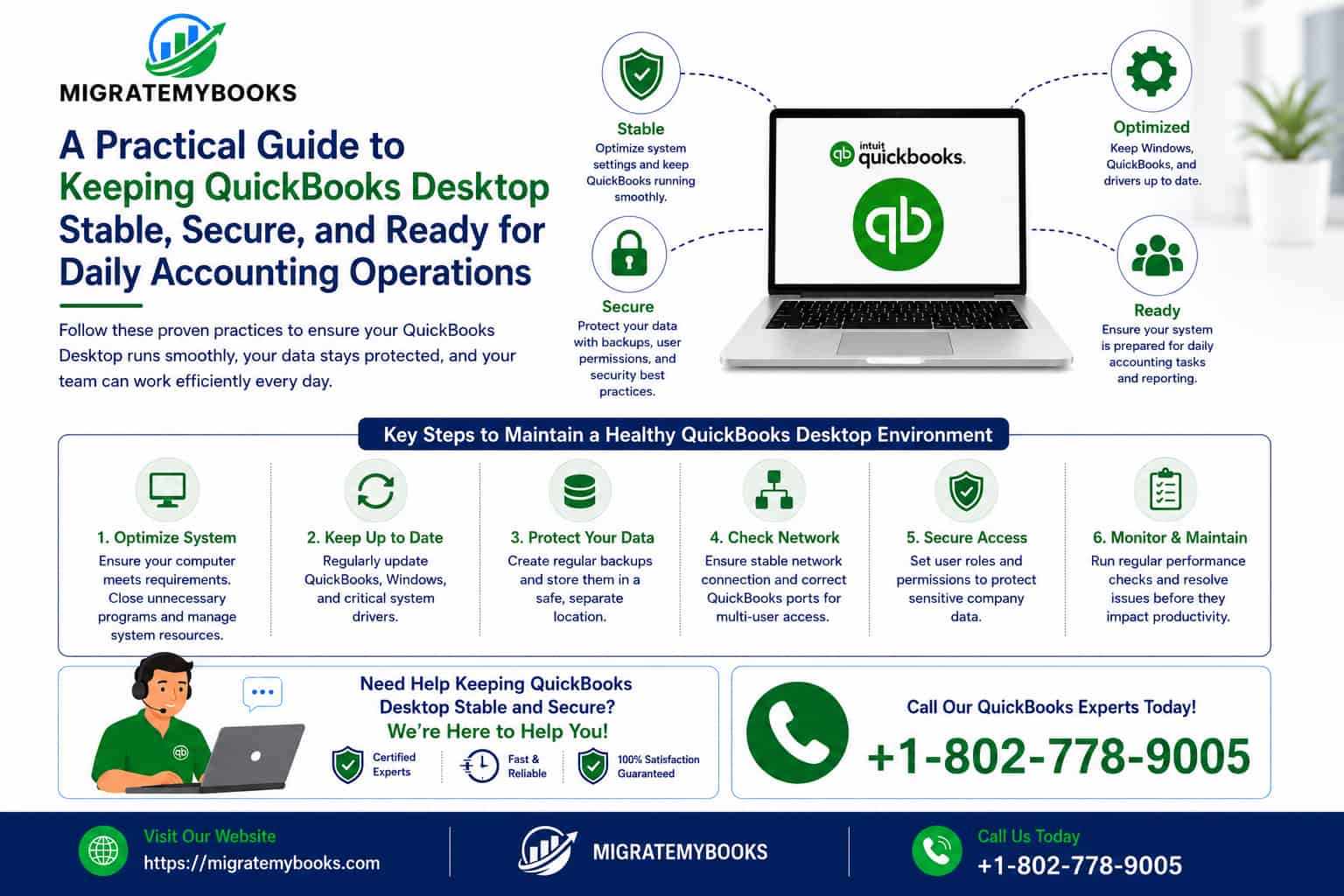
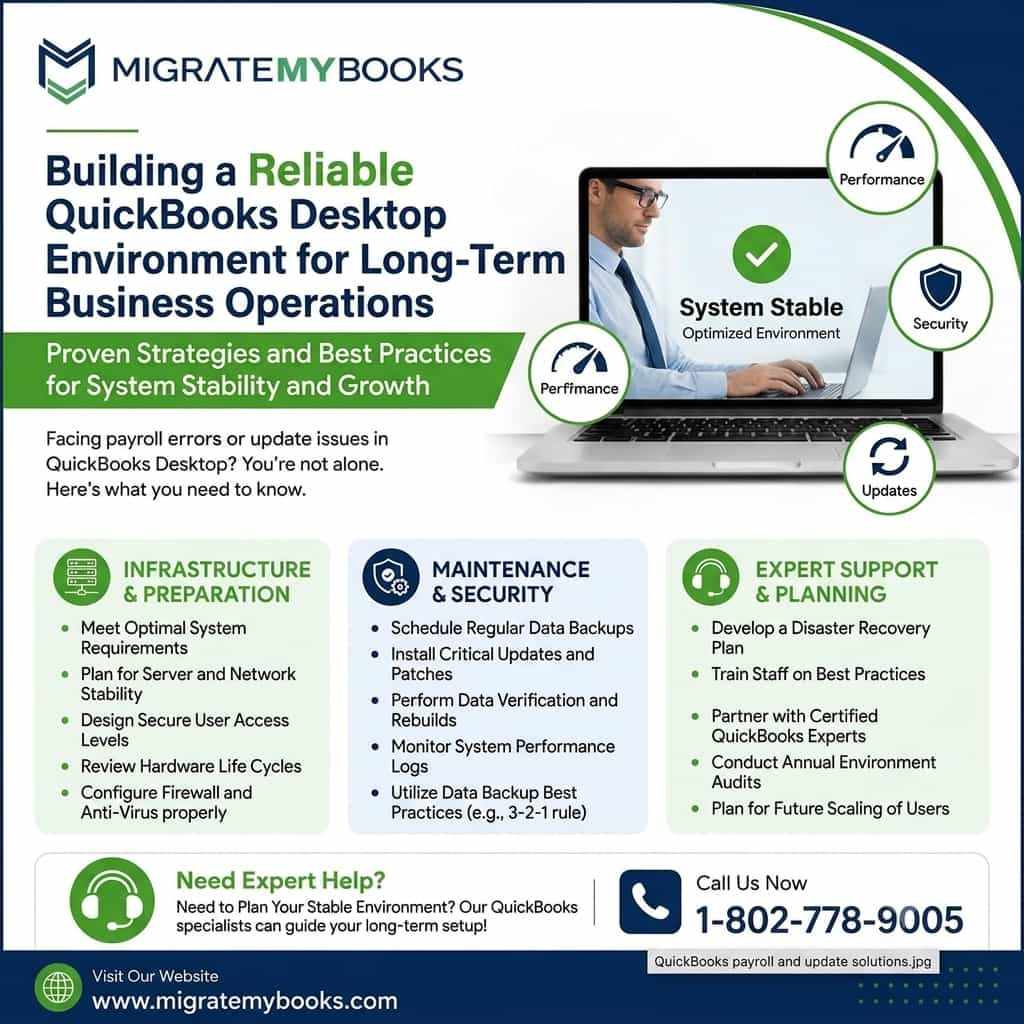
A successful accounting setup requires more than simply installing software and storing financial data. Building a Reliable QuickBooks Desktop Environment for Long-Term Business Operations involves maintaining healthy company files, reliable network infrastructure, secure communication channels, updated Windows components, and effective backup strategies. As businesses grow, their accounting environment becomes more complex, making proactive monitoring and proper system management essential for maintaining consistent performance and reducing unexpected interruptions.
How QuickBooks Desktop Processes Accounting Data
Every transaction entered into QuickBooks follows a structured workflow before becoming part of the accounting records.
For example, creating an invoice typically involves:
Validating entered information.
Recording transaction details.
Updating customer balances.
Modifying related accounts.
Refreshing financial reports.
Saving database changes.
Similar processes occur when recording vendor bills, inventory adjustments, payroll entries, customer payments, or journal entries.
Because QuickBooks continuously validates financial information during these processes, healthy database communication is essential for maintaining data accuracy.
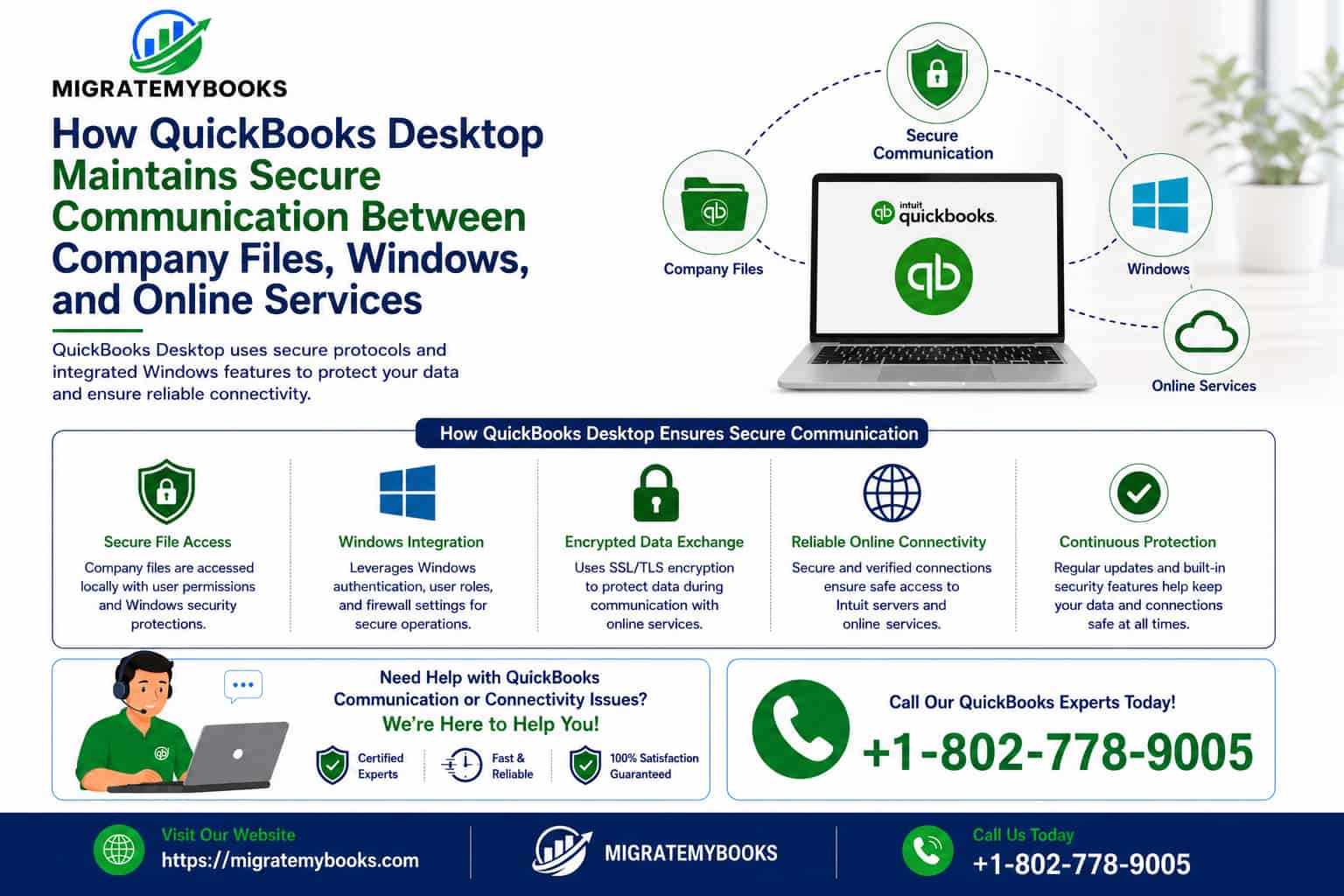
A complete understanding of QuickBooks Desktop reliability requires looking at how different components interact with each other. The QuickBooks Desktop Performance Blueprint: Understanding System Communication, Error Prevention, and Long-Term Reliability highlights the importance of maintaining strong connections between Windows services, database systems, storage environments, online services, and security controls. By understanding these relationships, businesses can identify potential weaknesses earlier, improve troubleshooting processes, and create a more dependable accounting workflow.
Windows Services Provide the Foundation
Although QuickBooks Desktop performs accounting functions, Windows provides the environment that allows those functions to operate.
Several Microsoft technologies support the application.
Microsoft .NET Framework
Supports numerous QuickBooks features and user interface components.
Microsoft Visual C++ Redistributables
Provide runtime libraries required by many QuickBooks program modules.
Microsoft MSXML
Handles structured data communication used throughout the software.
Windows Installer
Supports installation, repairs, maintenance, and software updates.
Windows Security Services
Control user authentication, file permissions, and access rights.
When these Windows components become outdated or damaged, QuickBooks may experience installation, update, or operational problems.
Routine Windows maintenance contributes significantly to software reliability.
Database Server Manager Supports Multi-User Access
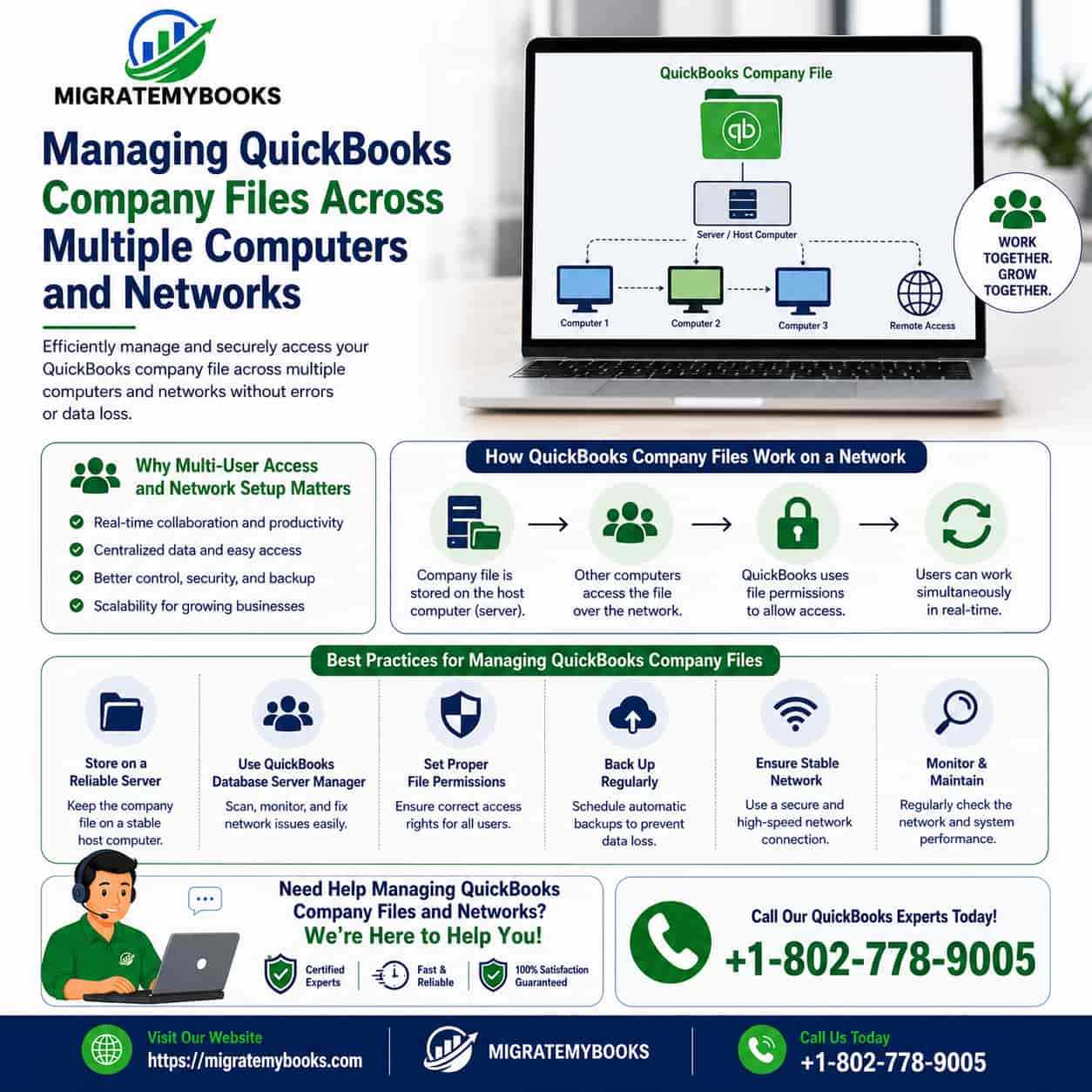
Many growing businesses require multiple employees to access the same company file simultaneously.
Database Server Manager makes this possible by:
Hosting company files
Managing user communication
Coordinating database access
Preventing conflicting edits
Maintaining data consistency
Without Database Server Manager, shared accounting environments would struggle to maintain reliable communication between workstations.
Although most users never see this service, it remains one of the most important components supporting QuickBooks Desktop performance.
Why Reliable Network Communication Matters
Businesses frequently store company files on dedicated servers or shared computers.
This allows multiple departments to collaborate, including:
Accounting
Payroll
Sales
Purchasing
Management
Successful collaboration depends on reliable communication between:
Workstations
Hosting computers
Database Server Manager
Shared folders
Windows networking
If communication becomes unstable, users may experience delays, interrupted sessions, or difficulty accessing company files.
A stable local network helps maintain consistent multi-user performance.
Secure Internet Connectivity Supports Modern Features
Although QuickBooks Desktop performs many accounting functions locally, internet connectivity remains essential for several services.
These include:
Product updates
Payroll updates
License verification
Banking connections
Payment services
Connected applications
Whenever QuickBooks communicates with external services, secure internet communication helps protect business information while maintaining software functionality.
If internet communication becomes interrupted because of firewall restrictions, unstable connectivity, proxy configuration, or Windows networking issues, online services may not operate correctly.
For example, businesses researching QuickBooks Error 12009 often discover that communication problems prevent QuickBooks from successfully reaching required online services.
Similarly, QuickBooks Error 12037 frequently indicates interruptions affecting secure communication between QuickBooks Desktop and update or verification servers.
Understanding these dependencies allows administrators to investigate the complete communication pathway rather than focusing only on the visible error message.
Payroll Requires Continuous Synchronization
Payroll processing depends on several software components remaining synchronized.
Important payroll systems include:
Employee records
Payroll subscriptions
Tax tables
Government updates
Payroll calculations
Online validation
Every payroll cycle depends on current information being available throughout the QuickBooks environment.
For example, QuickBooks Payroll Update Error PS032 often appears when payroll update communication cannot complete successfully. Instead of viewing payroll issues as isolated software failures, businesses should examine subscription validation, internet connectivity, Windows configuration, and update communication together.
Maintaining synchronization between these components helps ensure accurate payroll processing and regulatory compliance.
Preparing for Business Growth
As businesses expand, QuickBooks Desktop environments naturally become more demanding.
Growth typically results in:
Larger company files
More employees
Increased transaction volume
Additional payroll activity
More simultaneous users
Expanded reporting requirements
Supporting this growth requires proactive planning rather than reactive troubleshooting.
Businesses benefit from:
Reliable hardware
Stable networking
Healthy storage systems
Regular backups
Updated software
Documented configurations
Building a strong technical foundation today helps reduce future disruptions while supporting long-term accounting reliability.
Company File Communication: The Core of Reliable Accounting
The QuickBooks company file is much more than a storage location for financial records. Every time users open, edit, or save information, QuickBooks coordinates communication between multiple system components before any changes are recorded.
This process typically includes:
Locating the company file
Verifying Windows permissions
Connecting with Database Server Manager
Reading accounting data
Updating related transactions
Saving information securely
Refreshing reports and balances
If communication between any of these components is interrupted, QuickBooks may prevent users from opening the company file or completing accounting tasks.
Understanding this communication process helps businesses recognize that many company file issues are actually infrastructure or connectivity issues rather than problems with the accounting data itself.
Storage Infrastructure Directly Influences Performance
The physical location of the company file plays an important role in QuickBooks Desktop performance.
Businesses commonly store company files on:
Local desktop computers
Dedicated Windows servers
Shared office workstations
Centralized business storage
Each environment offers different advantages, but all require dependable hardware and consistent accessibility.
A healthy storage environment should provide:
Fast read/write performance
Sufficient free disk space
Stable hardware
Reliable backup procedures
Consistent uptime
When storage systems become overloaded or unreliable, QuickBooks may respond more slowly and become less dependable during daily accounting activities.
Planning Successful QuickBooks Desktop Migrations
As organizations expand, they often move QuickBooks Desktop to newer computers or upgraded servers.
Common migration scenarios include:
Replacing aging hardware
Moving to a dedicated accounting server
Upgrading Windows
Expanding office infrastructure
Improving storage performance
Migration should never be viewed as simply copying a company file from one computer to another.
A structured migration process includes several important steps.
Verify Company File Integrity
Before moving accounting data, confirm that the company file is healthy and functioning correctly.
Migrating damaged files can transfer existing issues into the new environment.
Create Verified Backups
Always create complete backups before beginning migration.
A verified backup provides a reliable recovery point if unexpected problems occur.
Document Existing Configuration
Record important settings such as:
Hosting configuration
Shared folders
User permissions
Printer settings
Connected services
Backup schedules
Proper documentation simplifies post-migration verification.
Test the New Environment
After migration, verify that:
Company files open successfully.
Multi-user mode functions correctly.
Payroll services communicate normally.
Reports generate accurately.
Online services remain accessible.
Testing every major workflow before returning to production helps prevent unexpected downtime.
Understanding Company File Access Problems
QuickBooks Desktop must consistently locate and communicate with the company file before accounting work can begin.
Communication may become interrupted when:
File locations change
Shared folders become unavailable
Permissions are modified
Network paths change
Storage devices experience problems
Database services stop responding
For example, QuickBooks Error 6000 107 is commonly investigated when QuickBooks cannot successfully access or communicate with a company file. While the specific cause varies, the issue often involves file accessibility, permissions, storage availability, or communication between QuickBooks Desktop and its hosting environment.
Rather than assuming the company file itself is damaged, businesses should evaluate the complete communication path from the workstation to the stored accounting data.
Multi-User Environments Depend on Stable Communication
Businesses often require several employees to work inside the same company file simultaneously.
Typical users include:
Accounting teams
Payroll administrators
Sales departments
Managers
Bookkeepers
Supporting these users requires reliable communication between:
Workstations
Hosting server
Database Server Manager
Shared folders
Windows networking services
If communication becomes inconsistent, users may experience delayed responses, temporary disconnections, or restricted company file access.
Maintaining reliable networking infrastructure helps improve both productivity and software stability.
Database Integrity Supports Accurate Financial Reporting
QuickBooks continuously organizes relationships between financial records.
These relationships include:
Customers
Vendors
Accounts
Payroll records
Inventory
Banking transactions
Financial statements
Maintaining database integrity allows QuickBooks to generate consistent reports and accurately reflect business activity.
As transaction volumes increase, maintaining healthy database communication becomes increasingly important.
Routine verification and proactive maintenance help reduce the likelihood of future inconsistencies.
Software Updates Help Maintain Compatibility
QuickBooks Desktop receives regular updates designed to improve:
Security
Performance
Compatibility
Stability
Feature functionality
Successful updates depend on communication between:
QuickBooks application files
Windows components
Microsoft services
Internet connectivity
Security software
If communication becomes interrupted during the update process, installation problems may occur.
For example, QuickBooks Error 15227 is often associated with situations where update-related communication or system configuration prevents QuickBooks from completing the update process successfully.
Keeping Windows current and maintaining reliable internet connectivity helps reduce update-related interruptions.
Why Network Reliability Matters for Business Continuity
Network quality influences nearly every shared QuickBooks Desktop environment.
A dependable network provides:
Stable workstation connections
Reliable database communication
Faster company file access
Consistent multi-user performance
Businesses should regularly review:
Network equipment
Server availability
Shared folder permissions
Network performance
Security policies
Small networking problems can gradually affect productivity long before users notice obvious software errors.
Security Protects Both Data and Communication
QuickBooks Desktop manages highly sensitive financial information.
Security systems protect:
Customer records
Vendor information
Payroll data
Banking details
Financial reports
Security also protects communication between:
Workstations
Company files
Database services
Online services
Important security practices include:
Reviewing firewall permissions
Maintaining antivirus exclusions where appropriate
Managing Windows user permissions
Protecting administrator accounts
Monitoring unauthorized access attempts
Balanced security allows QuickBooks to communicate safely without unnecessarily restricting legitimate business operations.
Understanding Database Communication Challenges
Every accounting action performed inside QuickBooks relies on successful communication with the database.
As businesses grow, increasing transaction volume places additional demands on:
Database processing
Storage performance
Network bandwidth
Windows services
Server resources
For example, QuickBooks Error 6000 301 is frequently associated with situations involving company file communication and database accessibility. Rather than representing a single software defect, this type of issue often highlights interruptions affecting how QuickBooks interacts with stored accounting data.
Evaluating storage performance, network stability, permissions, and database services together provides a more complete understanding of company file communication problems.
Creating a Stable Accounting Environment
Long-term QuickBooks reliability depends on proactive management instead of reactive troubleshooting.
Businesses benefit from:
Keeping QuickBooks Desktop updated
Installing Windows updates regularly
Monitoring company file health
Maintaining reliable backups
Reviewing security settings
Documenting network configurations
Testing recovery procedures
Planning migrations carefully
Together, these practices help create a dependable accounting environment capable of supporting continued business growth while reducing unexpected interruptions.
Building a Long-Term Performance Strategy
Maintaining QuickBooks Desktop is an ongoing process rather than a one-time task. As businesses expand, accounting systems must support larger company files, additional employees, more transactions, and increasingly complex reporting requirements. Without a proactive maintenance strategy, these growing demands can gradually affect software performance and system reliability.
A long-term performance strategy focuses on keeping every layer of the QuickBooks environment healthy, including Windows, storage devices, networking, database services, and internet communication. When each component is monitored regularly, businesses can identify potential issues before they interrupt daily accounting operations.
Monitoring System Health
Routine system monitoring helps organizations maintain a dependable accounting environment.
Key areas to review include:
QuickBooks Desktop Updates
Keeping QuickBooks updated helps improve:
Software stability
Security
Compatibility
Performance
Connected services
Installing updates regularly also reduces compatibility issues with newer Windows releases and Microsoft components.
Windows Operating System
Since QuickBooks Desktop depends heavily on Windows, businesses should monitor:
Windows Updates
Available storage space
System event logs
Hardware performance
Security settings
A healthy operating system provides the foundation required for reliable accounting operations.
Database Services
Businesses using multi-user mode should periodically verify:
Database Server Manager status
Hosting configuration
Connected workstations
Shared folder availability
Service performance
Monitoring these services helps prevent communication problems before they affect users.
Maintaining Healthy Company Files
Company files naturally increase in size over time as businesses record more transactions.
Regular maintenance should include:
Verifying company file integrity
Monitoring file growth
Reviewing data consistency
Removing unnecessary temporary files
Confirming backup success
Routine maintenance improves both reliability and reporting accuracy while reducing the likelihood of future database-related interruptions.
Why Backup Planning Is Essential
Backups protect one of the business's most valuable assets—its accounting data.
An effective backup strategy should include:
Daily Backups
Regular backups minimize potential data loss if unexpected issues occur.
Multiple Backup Copies
Maintain copies in separate secure locations to improve recovery options.
Restoration Testing
Businesses should periodically test backup files to confirm they can be restored successfully.
A backup that has never been tested should not be considered a complete disaster recovery plan.
Network Reliability Supports Business Continuity
Businesses relying on shared company files depend on stable networking every day.
Reliable networking supports:
Multi-user collaboration
Database communication
Company file access
Report generation
Payroll processing
Administrators should periodically review:
Network hardware
Router performance
Shared folder permissions
Server uptime
Connection quality
Strong networking infrastructure reduces unexpected interruptions and improves user productivity.
Maintaining Secure Communication
QuickBooks Desktop regularly communicates with external services for updates, payroll, subscription validation, and licensing.
Maintaining secure communication involves reviewing:
Firewall configuration
Antivirus settings
Windows permissions
Internet stability
Security certificates
Network policies
When these components work together correctly, QuickBooks can safely exchange information while protecting sensitive financial data.
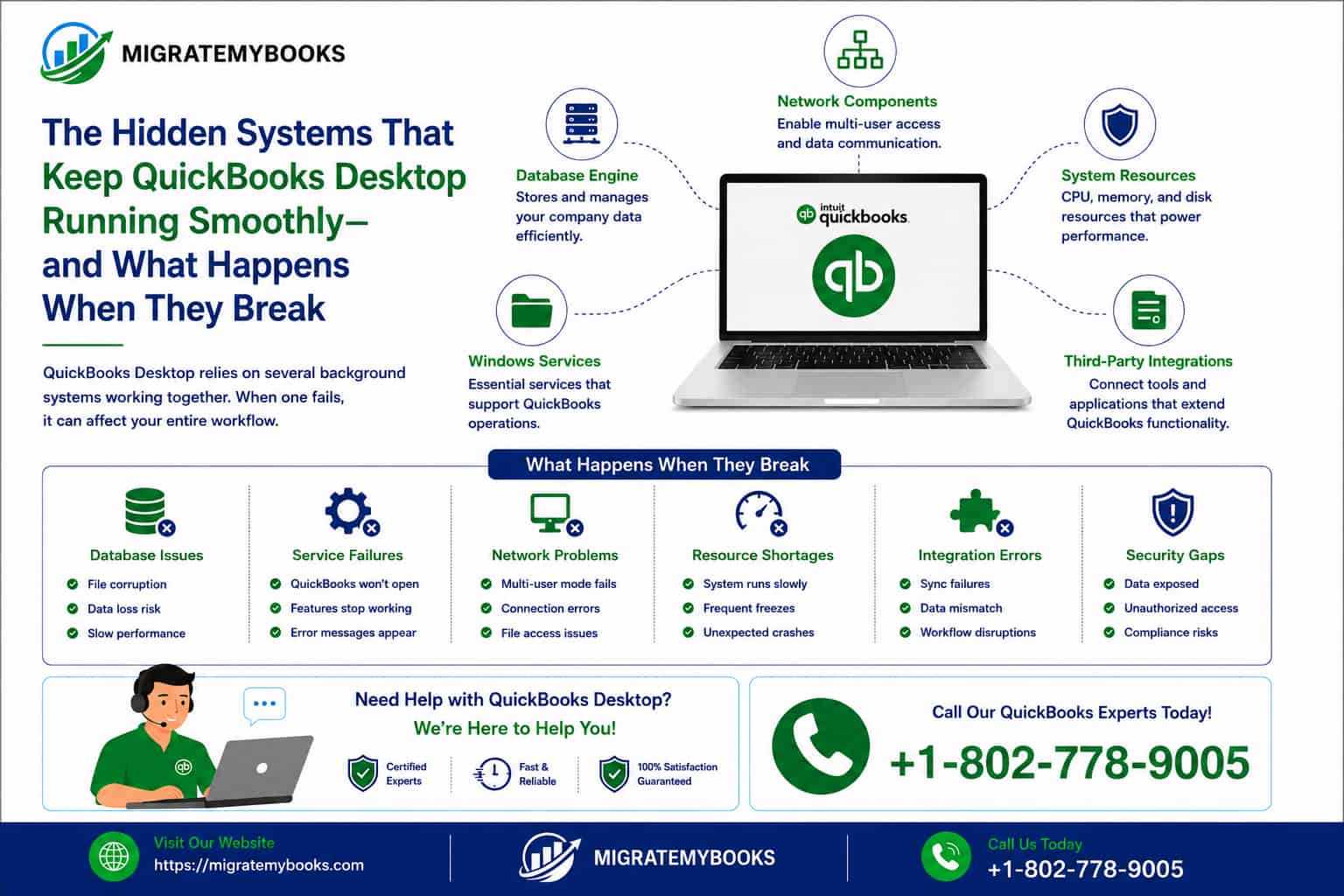
Behind every successful QuickBooks Desktop operation is a combination of hidden technical processes that manage data access, communication, and system performance. Behind QuickBooks Desktop System Services & Data Reliability explains how background services, database communication, company file management, and Windows infrastructure contribute to overall software reliability. These supporting systems operate continuously to ensure that transactions, reports, payroll functions, and financial records remain accessible and protected while supporting daily business operations.
Understanding Errors Through System Dependencies
Many QuickBooks Desktop errors are easier to understand when viewed as communication or infrastructure issues instead of isolated software failures.
For example:
QuickBooks Error 12009 often reflects interruptions affecting internet connectivity or communication with online services.
QuickBooks Error 12037 is commonly associated with secure communication problems during update or verification processes.
QuickBooks Payroll Update Error PS032 highlights how payroll services depend on successful communication between subscription validation, update servers, and local system components.
QuickBooks Error 6000 107 frequently relates to company file accessibility, storage, permissions, or communication with the hosting environment.
QuickBooks Error 6000 301 often emphasizes the importance of healthy database communication and reliable company file access.
QuickBooks Error 15227 commonly demonstrates how Windows configuration, update services, and software communication work together during the update process.
Although these errors have different identifiers, they all illustrate how QuickBooks Desktop depends on multiple interconnected systems working together successfully.
Preparing for Future Growth
As organizations continue growing, their accounting environment should evolve accordingly.
Growth may include:
Additional employees
Larger company files
More simultaneous users
Increased payroll activity
Expanded reporting
New hardware
Office relocations
Server upgrades
Preparing for these changes requires planning rather than reacting after problems appear.
Businesses should:
Review infrastructure regularly.
Document important configurations.
Maintain current backups.
Verify recovery procedures.
Test new environments before production use.
Careful planning helps reduce downtime while protecting valuable financial information.
A Practical QuickBooks Maintenance Checklist
Businesses can improve long-term reliability by following a consistent maintenance routine.
Daily
Confirm backups completed successfully.
Monitor unexpected error messages.
Verify critical accounting tasks.
Weekly
Review available disk space.
Check network performance.
Confirm multi-user connectivity.
Verify payroll synchronization.
Monthly
Install QuickBooks updates.
Install Windows updates.
Review firewall and security settings.
Verify company file health.
Quarterly
Test backup restoration.
Review user permissions.
Evaluate hosting configuration.
Audit network documentation.
Assess hardware performance.
This proactive approach helps reduce recurring issues while improving software stability over time.
Why Understanding the Entire Environment Matters
QuickBooks Desktop is most reliable when viewed as a complete business system rather than a standalone application.
Every accounting task depends on multiple technologies working together, including:
Windows services
Database management
Company file architecture
Internet communication
Security systems
Storage infrastructure
Networking
Backup solutions
When businesses understand these relationships, troubleshooting becomes more structured, migrations become smoother, and long-term maintenance becomes easier to manage.
Instead of responding only to visible error messages, organizations can identify underlying causes, improve system reliability, and reduce operational disruptions.
Conclusion
QuickBooks Desktop provides a powerful accounting platform because it combines financial management with a sophisticated technical infrastructure operating behind the scenes. Every invoice, payroll calculation, financial report, and company file depends on coordinated communication between Windows services, database components, storage devices, networking, security systems, and online services.
Understanding these system relationships helps explain why issues such as QuickBooks Error 12009, QuickBooks Payroll Update Error PS032, QuickBooks Error 12037, QuickBooks Error 15227, QuickBooks Error 6000 107, and QuickBooks Error 6000 301 occur. Rather than representing isolated software failures, these situations often indicate interruptions within the broader environment that supports QuickBooks Desktop.
By maintaining healthy company files, keeping Windows and QuickBooks updated, protecting secure communication, planning migrations carefully, monitoring system performance, and following preventive maintenance practices, businesses can build a more stable accounting environment. A proactive approach not only reduces downtime and improves troubleshooting efficiency but also ensures that QuickBooks Desktop continues to support reliable financial operations as the organization grows.



Write a comment ...